-
Whatsapp +86 13526654721
-
Email: sales@carmatrolls.com
-
Address: AUX Industrial Park, Shangjie District, Zhengzhou City, Henan Province, China
-
Whatsapp +86 13526654721
-
Email: sales@carmatrolls.com
-
Address: AUX Industrial Park, Shangjie District, Zhengzhou City, Henan Province, China

Selecting the Right Sewing Thread for Leather Car Mats
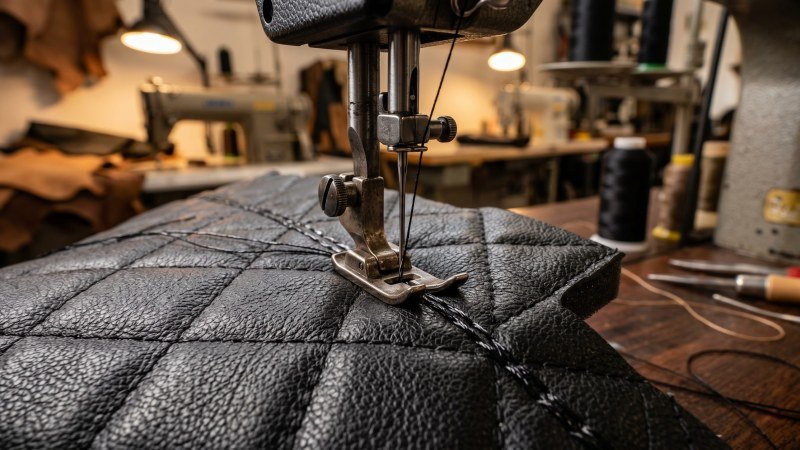
When fabricating or restoring custom automotive interiors, what is the exact sewing thread you should use for leather car mats?
The optimal sewing thread for leather car mats is size Tex 90 (V92) bonded nylon, which provides the necessary tensile strength and abrasion resistance to withstand heavy, constant foot traffic. That said, for open-top or off-road vehicles frequently exposed to direct sunlight or heavy moisture, bonded polyester is the superior choice due to its excellent UV and mildew resistance.
Bonded Nylon vs. Polyester: Material Performance Comparison
When evaluating options for automotive upholstery, what is the best thread material for stitching leather car mats?
The best material depends on the specific exposure of the mat. Bonded nylon is the industry standard because it provides exceptional abrasion resistance and tensile strength. This makes it ideal for the high-friction environment of the vehicle floor. But if the car mats will face direct sunlight or high moisture, polyester steps up as the superior choice. It offers excellent UV and mildew resistance.
The High Abrasion Resistance of Bonded Nylon
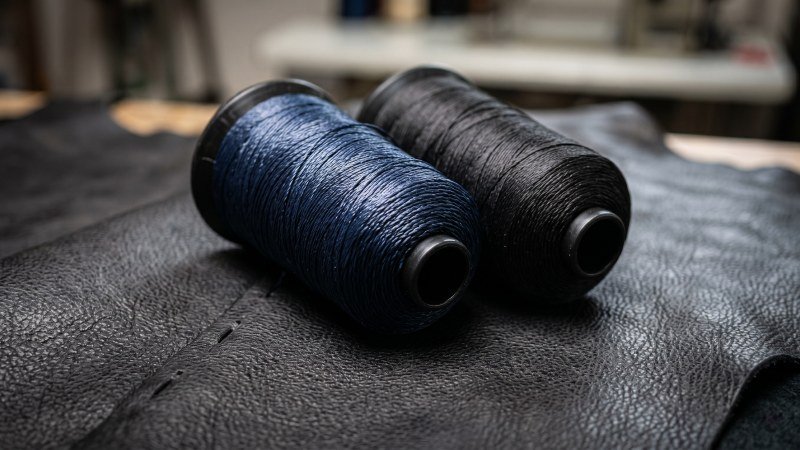
Why do most automotive upholstery shops rely on bonded nylon? Leather car mats endure constant abuse. Every time a driver enters the vehicle, their shoes grind dirt, sand, and grit directly into the floor mat seams. Bottom line: the thread has to survive brutal friction.
Bonded nylon excels in this tough environment. Manufacturers coat the raw nylon fibers with a protective liquid resin, then heat-cure it. This bonding process creates a smooth, tough exterior. Think of it like laminating two pieces of heavy leather together with industrial adhesive before stitching. The adhesive stops the leather pieces from shifting or peeling apart under stress. Similarly, the resin coating stops the individual nylon plies from untwisting, fraying, or snapping when subjected to constant foot traffic.
As a result, bonded nylon offers remarkable durability. It stretches slightly before breaking, which helps it absorb sudden impacts. On top of that, bonded nylon typically provides higher breaking strength than standard untreated threads.
- High Tensile Strength: Holds heavy leather layers tightly together.
- Friction Resistance: Survives the constant rubbing of shoe soles.
- Smooth Stitching: The resin coating helps the thread glide cleanly through thick materials.
Ever wonder why factory OEM mats rarely blow out at the seams? It’s this resin coating doing the heavy lifting. Just keep in mind that specific resin formulas and exact breaking strengths can differ between manufacturers. So, before you spool up for a new production run, always verify the exact performance specifications with your supplier.
UV and Moisture Protection with Polyester
If bonded nylon is so strong, why would a professional trimmer ever swap it for polyester? The answer lies in the specific environment inside the vehicle.
While bonded nylon handles friction beautifully, it has a notable weakness. It degrades when exposed to prolonged sunlight. Worse yet, nylon acts like a sponge for small amounts of water. For a standard enclosed sedan, this is rarely an issue since the vehicle floor remains mostly shaded and dry.
But think about an open-top convertible or a rugged off-road 4×4. In these cases, the leather car mats might face harsh, direct sunlight, or they might get soaked by rain, mud, and frequent deep-cleaning. Under those harsh conditions, polyester thread becomes the clearly superior option.
Polyester is naturally resistant to ultraviolet (UV) rays, meaning it won’t become brittle or lose its structural integrity after baking in the sun. Beyond that, polyester actively repels water. It resists rot, mildew, and mold far better than nylon. If moisture or sunlight is your main enemy, polyester guarantees the seams won’t quit on you over time.
To make the right choice for your specific project, review the comparison table below.
| Feature | Bonded Nylon | Polyester |
|---|---|---|
| Abrasion Resistance | Excellent | Good |
| Tensile Strength | Very High | High |
| UV Resistance | Poor | Excellent |
| Moisture Resistance | Moderate | Excellent |
| Best Car Mat Application | Enclosed sedans, daily drivers, high foot-traffic zones | Convertibles, off-road vehicles, frequently washed mats |
At the end of the day, both materials are highly capable for automotive work. You simply need to match the thread’s chemical properties to the physical environment the car mat will experience.
Understanding Thread Sizes and Weights for Automotive Leather
What thread size should you use to successfully sew thick leather car mats?
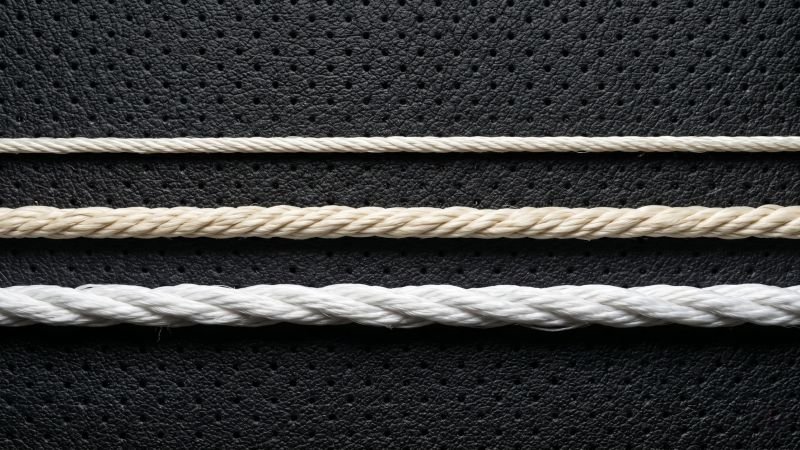
The ideal thread size for leather car mats depends on the seam’s purpose. For lightweight edge binding, use Tex 70 (V69) thread. For general structural seams requiring high durability, choose Tex 90 (V92) thread. Finally, for heavy decorative topstitching that must stand out visually against thick leather, select Tex 135 (V138) thread.
Tex 70 V69 for Edge Binding
Why would you run a lighter thread on heavy floor mats? Edge binding is the primary reason. Most car mats feature a fabric or thin vinyl binding wrapped around the outer edge to neatly finish the raw leather.
For this specific task, Tex 70 (also known as V69) is the perfect choice. It provides a breaking strength of approximately 11 pounds—plenty of strength for simply holding edge tape in place. Think of it like using a lightweight scrim backing behind a foam headliner. You aren’t looking for massive structural strength; you just need a smooth, flat finish.
Try forcing a thicker thread into that edge binding, and what happens? You end up with bulky, puckered edges. Tex 70 lays flat and blends cleanly into the binding material.
- Application: Fabric edges, thin vinyl borders, and hidden basting stitches.
- Appearance: Thin, unobtrusive, and flat against the material.
Tex 90 V92 for General Seams and Maximum Durability
If you’re only stocking one thread size for your upholstery shop, which one should it be? Without a doubt, Tex 90 (V92) is the industry standard.
This size is the absolute workhorse of automotive trimming. Offering an impressive breaking strength of about 15 pounds, it securely holds the main leather panels of the floor mat together and easily withstands the daily pressure of drivers stepping heavily on the seams.
Tex 90 strikes the perfect balance between strength and appearance. It’s thick enough to hold heavy leather securely, yet thin enough to sink nicely into the leather surface. This sinking action prevents the thread from sitting too high and wearing out from constant friction.
“Tex 90 is the default choice for 90% of structural automotive upholstery seams, matching factory Original Equipment Manufacturer (OEM) standards perfectly.”
Consider this similar to selecting a standard high-density backing foam for the mat—it provides the necessary core strength to withstand foot pressure without being too stiff to manipulate under the presser foot.
Tex 135 V138 for Heavy Decorative Stitching
Sometimes, you want the thread to be the star of the show. Many modern luxury car mats feature bright, contrasting French seams or intricate diamond-quilted patterns.
For these premium visual elements, Tex 135 (V138) is essential. This heavy-duty thread boasts a strong breaking strength of around 22 pounds. Here’s the real kicker: it’s highly visible. When you sew thick leather, thin threads just disappear deep into the material. Tex 135 sits proudly on top of the leather grain, creating that bold, rugged look expected in custom automotive interiors.
Quick Reference Guide for Thread Sizes
To help you spec the job quickly, here is a structured breakdown of these three common sizes.
| Thread Size | Average Breaking Strength | Best Car Mat Use Case | Visual Profile |
|---|---|---|---|
| Tex 70 / V69 | ~11 lbs | Edge binding and lightweight trim | Hidden or very subtle |
| Tex 90 / V92 | ~15 lbs | Main structural seams | Standard factory look |
| Tex 135 / V138 | ~22 lbs | Decorative topstitching | Bold and highly visible |
Get these baseline weights right, and you’ll ensure you’re applying the correct tension and structural integrity to every part of the mat.
Essential Needle and Machine Compatibility
How do you match your heavy-duty thread to the correct equipment when fabricating leather car mats?
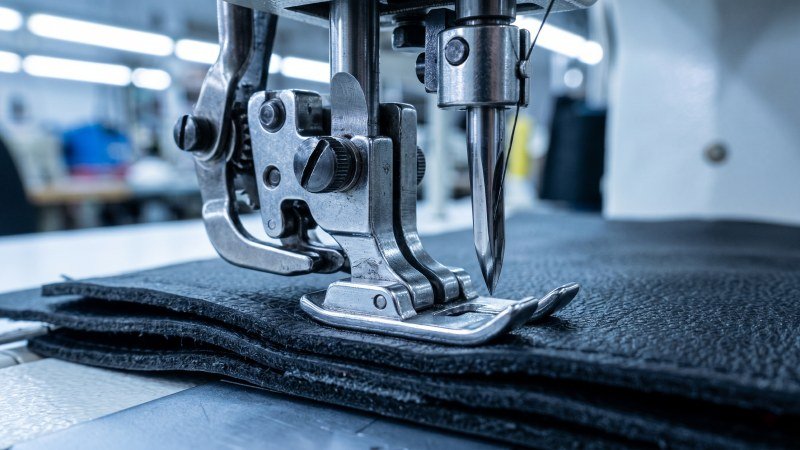
To achieve professional results, you must pair your chosen thread with the appropriate needle size and machinery. Thick upholstery thread requires large, specialized leather needles, typically ranging from size 18 to 24, to puncture the material without damaging the fibers. And don’t even think about running this on standard equipment—a walking foot industrial sewing machine is mandatory, as it actively pulls the thick, multi-layered automotive leather through the feed mechanism evenly.
Correct Needle Sizes for Thick Upholstery Thread
Why does needle size dictate the success of the seam? The sewing needle does a lot more than just carry the thread; it physically punches a hole through dense automotive leather. If the needle is too small, the thick thread will jam in the needle’s eye. The result? Severe friction, heat, and eventual thread breakage.
Think of this process like using a leather hole punch before installing a heavy-duty snap fastener. If the punched hole is too small, forcing the fastener through will inevitably tear and warp the surrounding leather. Similarly, a needle must create a puncture large enough for the thick upholstery thread to pass cleanly through the mat.
Automotive leather requires specialized cutting-point needles. Standard round-point needles just stretch the leather, creating ugly, puckered holes. Instead, leather needles feature a sharp, blade-like edge that slices a tiny, precise slit in the material.
Since needle sizing systems rarely align across the board between global manufacturers, always verify the exact metric or Singer size equivalent with your equipment supplier.
Here is a reliable baseline for pairing your needle size to your heavy-duty thread:
| Needle Size (Singer / Metric) | Optimal Thread Weight Capability | Best Car Mat Application |
|---|---|---|
| Size 18 / 110 | Medium (Tex 70) | Edge binding and thin vinyl borders |
| Size 22 / 140 | Heavy (Tex 90 to Tex 135) | Standard leather floor mat seams |
| Size 24 / 180 | Extra Heavy (Over Tex 135) | Multi-layered, thick custom designs |
Walking Foot Machines vs Standard Sewing Machines
Can you sew a heavy leather car mat with a standard drop-feed machine? Technically, yes, but the results will be a nightmare. Standard machines only use bottom feed dogs to push the material forward. Meanwhile, the top presser foot just goes along for the ride, gliding over the fabric.
When working with sticky, multi-layered automotive leather, this creates a major problem. The bottom layer moves properly, but the top layer drags behind, resulting in horribly uneven stitch lengths and warped seams.
Consider feeding heavy vinyl through an industrial cutting plotter. If only the bottom grit roller pulls the material while the top pinch rollers freely drag, thick materials will skew and stretch. A walking foot sewing machine operates with a similar corrective concept. It features a specialized mechanism where both the upper foot and the lower feed dogs move together.
With a walking foot, the machine grips the thick leather mat firmly from both the top and the bottom, pulling all the layers backward simultaneously. This mechanical grip ensures perfectly consistent stitch lengths every single time.
- Standard Machines: Prone to slipping on sticky leather and struggling with thickness.
- Walking Foot Machines: Provide synchronized feeding for thick, dense automotive upholstery.
“For professional auto trimming, a walking foot machine is not an option; it is an absolute necessity for piercing dense multi-layer materials consistently.”
Troubleshooting Common Heavy Duty Stitching Issues
How can you effectively resolve the most frustrating sewing errors when working with heavy automotive floor materials?
To troubleshoot common heavy-duty stitching issues, operators must strictly manage friction and machine calibration. Fraying is prevented by ensuring a smooth thread delivery path and utilizing OEM-compliant cooling methods to reduce heat. Meanwhile, achieving proper tension requires carefully balancing the top and bobbin mechanisms so the stitch locks perfectly in the center of the dense material.
Preventing Thread Fraying Through Thick Leather Layers
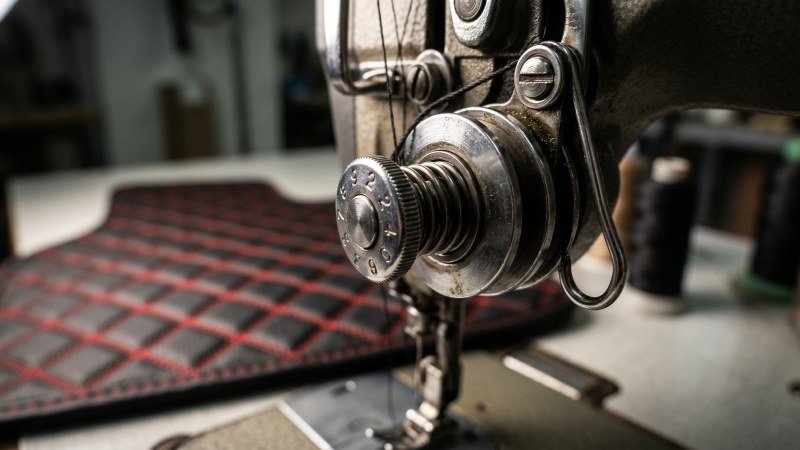
Even with a tough resin coating, your thread might still shred during production. Why does this happen? The primary culprit is extreme friction.
When a needle punches through multi-layered automotive leather, it generates intense heat. Think of this process like using a high-speed drill bit on a solid aluminum block. Without cutting fluid, the bit overheats, binds, and eventually shatters. Similarly, the extreme heat from friction melts the thread’s protective coating. Once that coating is gone, the raw fibers catch on the dense leather and split apart.
To prevent this frustration, you must actively reduce friction in your setup. First, always inspect your thread guides and tension discs—a microscopic burr on the metal surface will instantly slice heavy thread.
Want to stop that heat buildup dead in its tracks? Utilize an external thread lubricator or a needle cooling system. Here is the golden rule: you must strictly use an automotive-grade, silicone-free thread lubricant or a compressed cold-air needle cooler. Never use standard silicone-based lubricants in an automotive facility. Silicone contamination is a severe violation of OEM standards, as it causes catastrophic paint defects (like “fish-eyes”) in paint shops and leads to adhesive failures during vehicle assembly. A specialized silicone-free lubricant safely lowers the operating temperature and allows the heavy thread to glide smoothly without compromising the manufacturing environment.
Achieving Proper Tension for Flawless Seams
Perfect tension is the absolute secret to a professional automotive interior. If your thread tension is incorrect, the final seam will either look sloppy or fail completely under stress.
In a lockstitch machine, the top thread and the bottom bobbin thread pull against each other, and they must meet and twist exactly in the middle of the heavy leather mat. If the top tension is too tight, the bobbin thread pulls straight up to the surface. Flip that around—if the bobbin tension is too tight, you’ll see ugly loops form on the bottom of the mat.
Dialing this in isn’t a guessing game. Imagine calibrating an industrial pneumatic press in a machine shop. You don’t just turn the pressure dial randomly; you make small, calculated adjustments until the clamping force is perfectly balanced.
Follow these exact steps to dial in your machine correctly:
- Test on Scraps: Always use the exact leather, foam, and backing material you plan to sew.
- Set the Bobbin First: Adjust the bobbin case screw until it offers a smooth, consistent resistance.
- Adjust the Top: Gradually increase the upper tension dial until the stitch locks squarely inside the material layers.
For quick reference on the shop floor, use the troubleshooting table below to identify tension issues.
| Visual Symptom | Root Cause | Necessary Adjustment |
|---|---|---|
| Loops visible on the top surface | Top tension is too tight | Decrease top tension slightly |
| Loops visible on the bottom surface | Top tension is too loose | Increase top tension slightly |
| Material puckering severely | Both top and bobbin tension are too tight | Loosen both mechanisms equally |
Conclusion
At the end of the shift, turning out durable, professional-grade leather car mats comes down to perfectly matching your materials and equipment to the job. By selecting bonded nylon for high-friction durability or polyester for UV resistance, and pairing it with a Tex 90 weight thread, you ensure your mats will survive harsh automotive environments. Combining these choices with a properly tensioned walking foot machine and the correct cutting-point leather needle will drastically reduce shop floor frustrations like fraying and skipped stitches.
If you are ready to upgrade your upholstery production line or need further technical assistance selecting the perfect thread for your next automotive project, please feel free to contact us.