-
Whatsapp +86 13526654721
-
Email: sales@carmatrolls.com
-
Address: AUX Industrial Park, Shangjie District, Zhengzhou City, Henan Province, China
-
Whatsapp +86 13526654721
-
Email: sales@carmatrolls.com
-
Address: AUX Industrial Park, Shangjie District, Zhengzhou City, Henan Province, China

Understanding Car Mat Material Thickness and Density for Durability
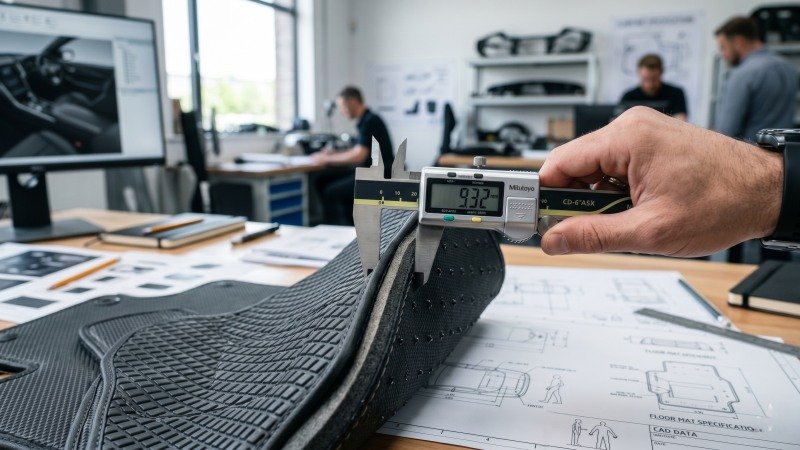
How do material thickness and density actually determine the long-term durability of your vehicle’s car mats?
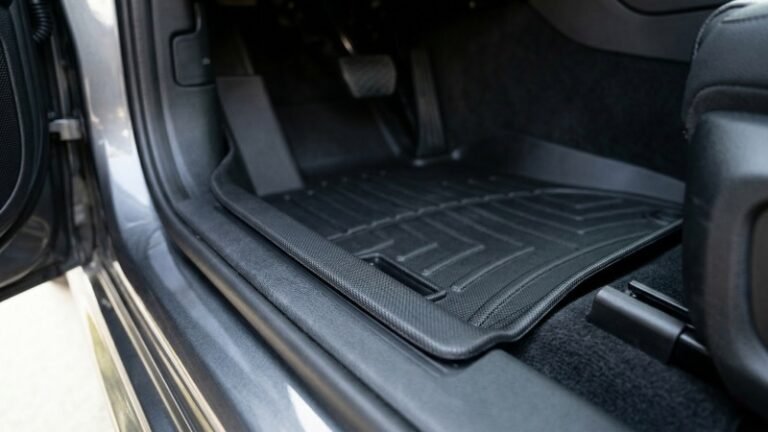
The durability of a car mat is primarily dictated by a high material density that resists heavy compression and surface friction, rather than just overall thickness. While excessive thickness can cause pedal interference and thermal warping, an optimal balance of a 7mm to 12mm multi-layer composite with a highly dense core provides the best structural integrity, safety, and lifespan for daily driving.
Why Thicker Car Mats Are Not Always Better
Many car owners mistakenly believe that the thickest floor mats automatically offer the best interior protection for their vehicles.
Here’s the reality: while maximum thickness might seem like the logical choice for floor protection, overly thick car mats often create significant safety and structural problems. Excessive material thickness reduces a mat’s ability to contour to the floorboard, increasing the risk of it shifting and obstructing the vehicle’s pedals. Worse yet, thick materials without proper structural engineering are highly prone to thermal warping, curling, and edge degradation.
The Safety Hazard of Pedal Interference
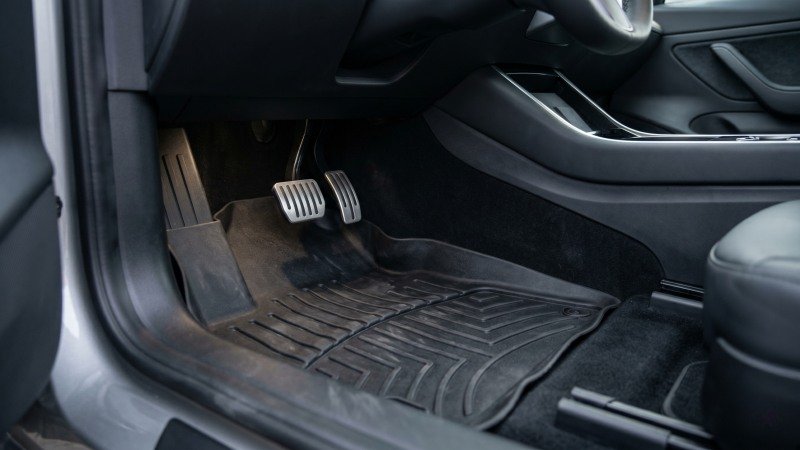
Does more material guarantee a better driving experience? Often, the exact opposite is true. Ever wonder why OEMs are so obsessive about floorpan dimensions? It’s because the most critical issue with thick car mats is pedal interference. Vehicle manufacturers design the driver’s footwell with highly specific clearance limits. Usually, the distance between a fully depressed accelerator or brake pedal and the floorboard is tightly regulated.
When you install a mat that exceeds the standard thickness, you eat into this crucial clearance. Think about the tolerances: if an overly thick mat slides forward even slightly, it can easily wedge underneath or over the pedals. This creates a severe safety hazard known as pedal entrapment.
The Mechanics of Entrapment
Consider how custom automotive seat covers function. If a seat cover is padded with excessively thick, low-quality foam, it prevents the seat’s internal heating systems from working and can even block side airbag deployment. By the exact same logic, a floor mat that is too thick restricts the pedal’s required range of motion and creates an unintended safety blind spot.
The National Highway Traffic Safety Administration (NHTSA) explicitly recognizes floor mat interference as a critical safety defect and a primary cause of unintended acceleration in passenger vehicles.
For example, universal rubber mats exceeding 15mm in thickness, which lack precise custom-molded anchoring systems, show a significantly higher risk of sliding. Because floorpan dimensions and factory pedal clearances vary greatly across different vehicle makes and models, you should always verify the exact thickness range and fitment compatibility with your supplier before making a purchase.
Warping and Curling Issues in Overly Thick Mats
Safety hazards aside, you’ll find that overly thick mats often fail visually and structurally much faster than expected. You might assume a thick slab of material will always lay completely flat. Basic physics, though, has other plans.
The primary culprit behind curling edges is thermal expansion. The inside of a parked car can reach extreme temperatures during the summer. When a thick car mat heats up, the temperature across the material becomes completely uneven. The top surface facing the sun absorbs severe heat and expands rapidly. Meanwhile, the bottom surface resting against the vehicle’s shaded metal floorpan remains much cooler.
Uneven Thermal Expansion
This dramatic temperature difference creates intense internal stress. The expanding top layer pushes outward, pulling the cooler, rigid bottom layer along with it. The inevitable result? The edges of the mat have nowhere to go but up, causing severe curling.
Have you ever seen a cheap plastic dashboard buckle under the July sun? This behavior is identical to how an improperly engineered injection-molded automotive dashboard panel warps under direct UV exposure. If the plastic molding is too thick and lacks built-in stress relief channels, the top surface warps permanently under the heat while the base remains rigid.
To illustrate this issue, consider the following comparison:
| Characteristic | Overly Thick Mats (15mm+) | Moderate Thickness Mats (7-12mm) |
|---|---|---|
| Thermal Stress | High internal tension due to uneven heating. | Low internal tension; heats evenly. |
| Edge Curling | Highly likely, especially near the door sills. | Very rare; maintains a flat contour. |
| Floor Conformity | Poor; struggles to bend around sharp floor dips. | Excellent; hugs tight curves naturally. |
The takeaway here? Simply adding more material thickness does not equate to a longer lifespan. If anything, it accelerates the mat’s physical deformation. Thick mats that curl at the edges not only look unsightly but also fail their primary purpose, allowing dirt and water to spill directly onto the factory carpet underneath.
How High Density Prevents Premature Wear and Tear
Understanding the role of material density is crucial for protecting your vehicle’s floor from daily damage and extending the life of your interior.
High density determines the exact concentration of material packed into a specific volume, fundamentally acting as the core structural support of the car mat. A densely packed cellular structure prevents premature wear by resisting heavy compression and friction, effectively stopping permanent indentations from forming while maintaining rigidity across extreme temperature fluctuations.
Resisting Heel Friction and Permanent Indentations
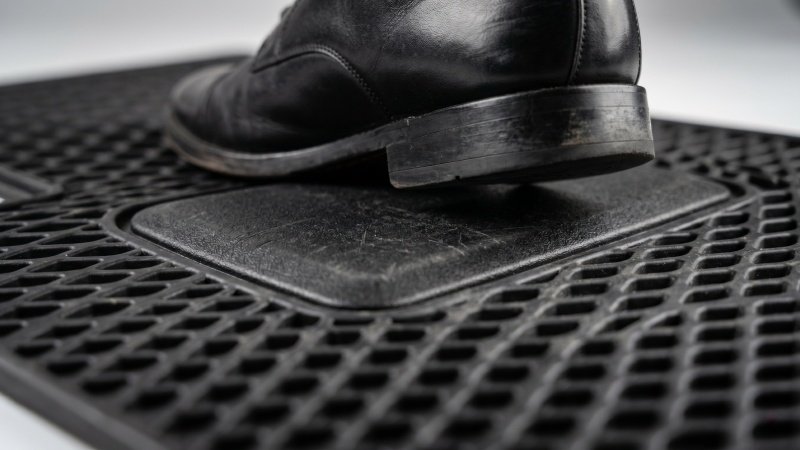
Why do floor mats almost always fail right beneath the driver’s feet? The driver’s right heel acts as a constant, heavy pivot point between the gas and brake pedals. This repetitive motion creates intense, localized friction. Low-density materials simply cannot survive this focused stress.
When you rest your heel on a low-density mat, the loose internal structure collapses. The material fails to bounce back, creating a permanent hole or dent. In the automotive manufacturing industry, we refer to this failure as a “compression set.”
Want a direct comparison? Look at automotive seat cushioning. Think of how a high-density molded foam seat cushion retains its ergonomic shape after thousands of hours of driving. Put that up against standard low-density seat foam, which easily flattens and leaves a permanent sinkhole under the exact same driver’s weight. High-density car mats function precisely the same way.
High-density materials pack their molecules tightly together. This tight packing acts as a solid shield against abrasive shoe soles and heavy work boots. Premium automotive floor protection often targets a material density range of 0.9 to 1.1 g/cm³ for the top layers, depending on the specific polymer blend used.
The table below highlights how density directly impacts daily wear:
| Characteristic | Low-Density Car Mats | High-Density Car Mats |
|---|---|---|
| Heel Wear | Rapidly develops holes and tears. | Strongly resists surface scraping. |
| Indentation | Forms permanent, ugly dents. | Recovers its original shape instantly. |
| Lifespan Expectancy | Typically degrades within 1 to 2 years. | Reliably lasts for 5 or more years. |
Maintaining Structural Integrity Across Extreme Temperatures
Does extreme weather destroy your vehicle’s interior accessories? Severe temperature swings will easily ruin weak automotive parts. Blistering summer heat makes cheap materials unacceptably soft and sticky. Conversely, freezing winter temperatures make those same materials rigid, brittle, and highly prone to cracking under pressure.
High density effectively solves these environmental challenges. A highly dense material contains fewer internal air gaps. Because of this, it shrugs off sudden exterior temperature changes. The tightly bound molecular structure restricts thermal expansion during hot summers. It also prevents severe material shrinkage during cold winters.
Consider the engineering behind elastomeric weather-stripping seals on car doors. A high-density rubber seal easily withstands baking summer heat and freezing winter air without cracking or shrinking, keeping its exact shape to block out water. Swap that for a low-density seal, and it will quickly dry rot in the heat and snap in the cold.
Industry data shows that high-density elastomeric mats can maintain their structural shape in temperatures ranging from -40°F up to 140°F. The real-world benefit? The mat stays securely anchored to your floorpan year-round. It will not melt onto your factory carpets in July, nor will it shatter under your heavy winter boots in January.
The Shift from Single-Layer to Multi-Layer Construction
Modern automotive accessory manufacturers are increasingly moving away from basic, single-piece floor coverings in favor of advanced multi-layer designs.
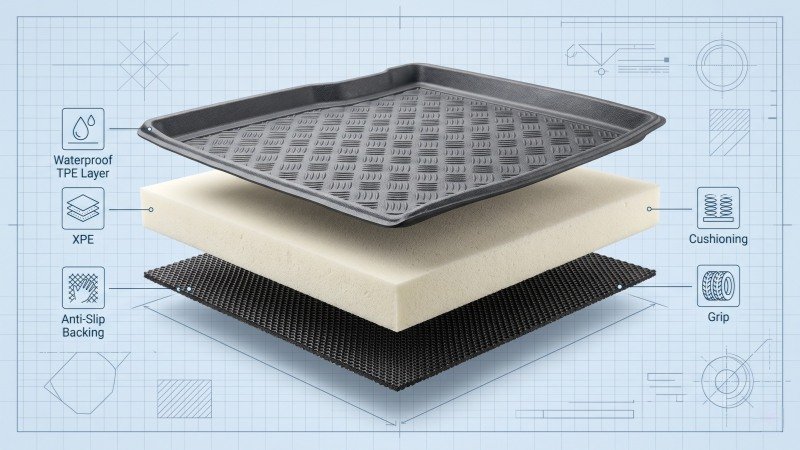
The automotive industry is shifting to multi-layer construction because single-layer materials force a severe compromise between flexibility, waterproofing, and structural strength. Multi-layer composites strategically combine specialized materials—like tough TPE top layers for wear resistance and dense XPE foam cores for shock absorption—creating a highly engineered product that significantly outlasts traditional rubber or carpet.
Limitations of Traditional Single-Layer Rubber and Carpet
Historically, we all relied on simple rubber or fabric mats. But from an engineering standpoint, these single-layer designs present major physical limitations. A single material must perform multiple jobs simultaneously. It must resist water, absorb heavy foot impacts, and grip the vehicle floor. Unfortunately, no single material naturally excels at all these tasks.
For example, traditional automotive carpet utilizes loosely woven fibers. This low-density structure absorbs spills and traps dirt deeply. The net result? The fibers break down and rot over a very short period.
Switch gears to heavy-duty rubber mats, and you’ll see they rely purely on massive thickness for their structural strength. If an engineer designs a single-layer rubber mat, they must make it extremely thick so it does not tear under pressure. The structural trade-off is that this extra thickness adds dead weight and drastically reduces the mat’s flexibility.
Consider the construction of a modern automotive tire. Manufacturers do not pour a single chunk of rubber into a mold. Instead, they combine rigid steel belts, flexible nylon overlays, and highly specialized exterior rubber compounds. A tire made from just one solid layer of rubber would fail rapidly under driving stress. Single-layer car mats fail for the exact same structural reason.
Industry data highlights this specific flaw. Standard single-layer PVC or rubber mats typically show severe physical degradation within just two to three years of daily use.
Why Multi-Layer TPE and XPE Composites Last Longer
Why settle for a single material when a layered approach solves all the structural compromises at once? To solve the limitations of single materials, the automotive accessory industry developed multi-layer composites. These advanced designs typically feature three distinct bonded layers. Each specific layer performs a highly engineered function. The result is a mat that becomes incredibly durable without requiring excessive, unsafe thickness.
The Mechanics of Composite Layers
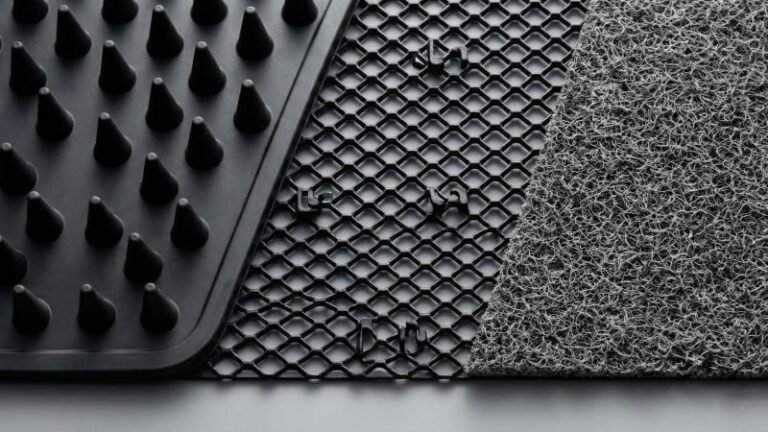
First, the top layer usually consists of Thermoplastic Elastomer (TPE). TPE provides a highly dense, completely waterproof shield. It offers excellent resistance against boot scratches and chemical spills.
Second, the middle core utilizes Cross-linked Polyethylene (XPE) foam. This high-density core acts as the mat’s structural backbone. It absorbs heavy impacts and effectively blocks road noise.
Finally, the bottom layer features an advanced anti-skid backing. This specialized textured surface grips the factory carpet tightly to prevent dangerous sliding.
This multi-layer approach mirrors the construction of premium automotive headliners. A vehicle headliner uses a rigid backing board for shape, a soft foam core for acoustic dampening, and a durable fabric top layer. This composite design creates a lightweight, sound-absorbing, and durable structure that a single layer of material simply cannot achieve.
The table below outlines the clear functional advantages of multi-layer construction:
| Feature | Traditional Single-Layer Mats | Multi-Layer TPE/XPE Composites |
|---|---|---|
| Material Focus | One single material attempts to do everything. | Each distinct layer serves a highly specialized purpose. |
| Weight to Strength Ratio | Requires heavy thickness for basic structural strength. | High structural strength achieved with a slim, lightweight profile. |
| Water and Spill Resistance | Rubber blocks water, but basic carpet absorbs it entirely. | Top TPE layer ensures continuous, 100% waterproof protection. |
| Expected Lifespan | Typically degrades and fails in 2 to 3 years. | Reliably maintains its shape and function for 5 to 10 years. |
At the end of the day, engineering different material densities into a single composite creates a vastly superior floor protection system. Multi-layer composites deliver the perfect balance of toughness, flexibility, and long-term durability for modern vehicles.
Finding the Ideal Specifications for Your Vehicle
What exact specifications should you look for when choosing the perfect car mats for your vehicle?
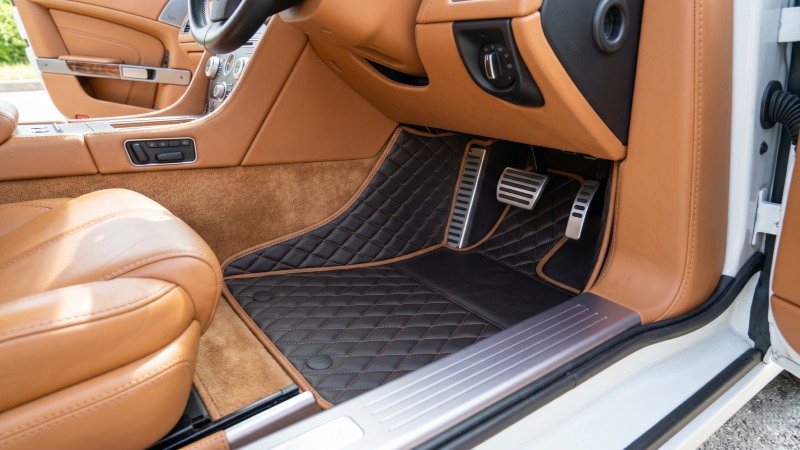
To ensure maximum durability and a precise fit, you must select car mats with a specific balance of thickness and material density. The ideal thickness for a high-quality car mat ranges between 7mm and 12mm, providing optimal flexibility without compromising floor clearance. Meanwhile, the core material density should measure between 0.9 and 1.1 g/cm³ to effectively resist heavy foot pressure and structural deformation.
Recommended Thickness Ranges for Daily Driving
How thick should a car mat actually be for daily commuting? Finding the perfect thickness is a precise balancing act. If a mat is too thin, it will tear. If it is too thick, it will not fit properly.
Think about how we design custom-fit automotive cargo liners. If the liner is too thin, it fails to protect the trunk from heavy cargo. On the flip side, if it is too thick, it loses flexibility and makes it impossible to lift the floor panel to access the spare tire beneath it. Car mats require the exact same dimensional precision. They must be thick enough to offer robust protection but thin enough to mold perfectly to the contours of your floorboard.
Industry standards point to a very specific “goldilocks” zone for daily driving. For modern composite mats, a total thickness of 7mm to 12mm is optimal. This range provides excellent shock absorption for your feet while maintaining strict safety clearances.
Because exact floorpan dimensions and clearance requirements vary wildly between different vehicle makes and models, you should always verify the exact thickness range with your supplier to ensure a safe fit.
The table below breaks down common thickness specifications:
| Thickness Range | Classification | Driving Application | Structural Performance |
|---|---|---|---|
| Under 6mm | Ultra-Thin | Budget or temporary use. | Poor; highly prone to tearing and puncturing. |
| 7mm to 12mm | Optimal/Standard | Daily commuting and family vehicles. | Excellent; balances flexibility and high durability. |
| 13mm and Above | Heavy-Duty | Commercial trucks with flat floorpans. | Rigid; poor contouring and risks pedal interference in cars. |
Key Density Indicators to Look For When Buying
When shopping for new floor mats, you cannot judge the quality by looking at the thickness alone. You must also check the material density. High density guarantees that the mat will keep its shape over years of heavy use.
How do you measure this in a real-world scenario? In the automotive manufacturing industry, engineers measure foam and polymer density using grams per cubic centimeter (g/cm³) or grams per square meter (g/m²).
Consider the acoustic dampening materials installed inside car doors. A low-density foam pad takes up a lot of space but blocks zero road noise. Compare that to a thin sheet of high-density butyl rubber, which effectively deadens sound and stops metal vibration. Car mats work the exact same way. A dense core provides superior impact resistance and soundproofing.
For a high-quality XPE foam core, you should look for a density rating of around 0.08 to 0.10 g/cm³ (often listed as foam density). For the top surface layer, premium materials usually measure between 0.9 and 1.1 g/cm³. Some manufacturers list overall weight per square meter instead. In that case, a premium multi-layer mat should weigh approximately 2500 g/m² to 3000 g/m².
Because material blends and testing standards fluctuate between manufacturing facilities, it’s highly recommended to review these specific density indicators with your supplier before you buy.
Physical Testing for Density
If technical specification sheets are unavailable, you can perform a simple physical test. Press your thumb firmly into the center of the mat. A low-density material will easily squash down to the floor and slowly return to shape. A high-density material will offer strong, immediate resistance against your thumb and bounce back instantly.
Conclusion
Let’s bring it all together. When upgrading your vehicle’s interior, looking past surface-level thickness is essential for long-term satisfaction. The true durability of a car mat lies in its advanced multi-layer construction and high-density core, which work together to prevent heel wear, withstand extreme temperatures, and ensure a safe, precise fit around your pedals. Stick to that optimal 7mm to 12mm thickness range, verify the structural density, and you’re investing in floor protection that actually performs over the long haul.