-
Whatsapp +86 13526654721
-
Email: sales@carmatrolls.com
-
Address: AUX Industrial Park, Shangjie District, Zhengzhou City, Henan Province, China
-
Whatsapp +86 13526654721
-
Email: sales@carmatrolls.com
-
Address: AUX Industrial Park, Shangjie District, Zhengzhou City, Henan Province, China

Why TPE is Dominating the Global Car Mat Market: A Strategic Shift from PVC
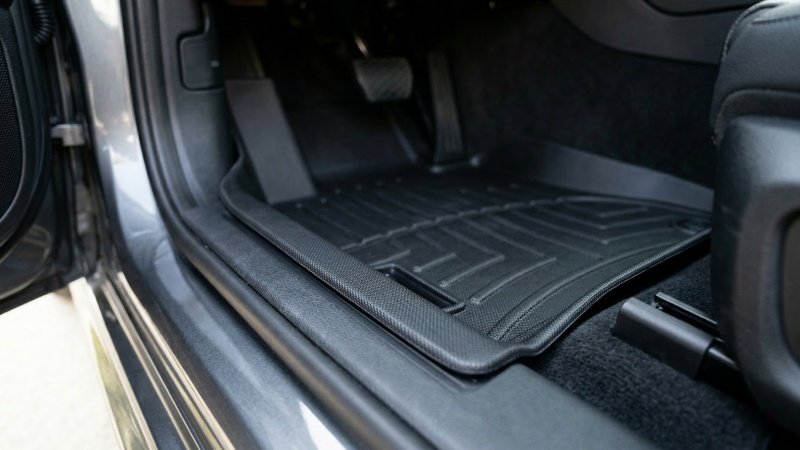
Why is the global automotive industry rapidly replacing traditional PVC floor mats with Thermoplastic Elastomer (TPE) alternatives?
TPE is dominating the global car mat market because it delivers superior structural durability across extreme temperatures, eliminates toxic off-gassing, and allows for precision 3D-scanned high-wall manufacturing. Add to that its 100% recyclability, and it aligns perfectly with stringent environmental regulations and modern automaker OEM standards, making it the premier choice for automotive interior protection.
Health and Environmental Compliance Directives
How do health and environmental regulations drive automakers to choose TPE over PVC for interior accessories?
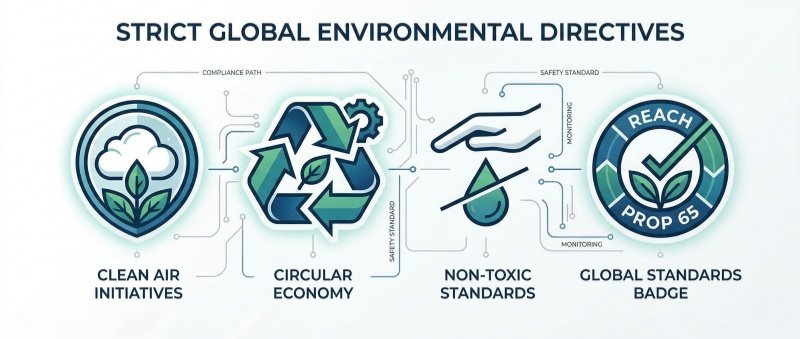
Automakers are switching to TPE because it complies with strict global environmental directives by eliminating toxic emissions and phthalates found in PVC. Let’s be real: TPE’s fully recyclable nature directly supports the automotive industry’s urgent shift toward sustainable manufacturing practices.
Eradicating Toxic Off-Gassing and Cabin Odors
Have you ever noticed a strong chemical smell in a new car on a hot day? That smell often comes from Volatile Organic Compounds (VOCs). It’s no surprise car manufacturers are scrambling to eliminate these odors.
Traditional PVC relies on liquid plasticizers to stay soft. However, when a car sits in the sun, cabin temperatures can easily exceed 60°C (140°F). Under this intense heat, the plasticizers in PVC break down and turn into gas. This process is called off-gassing. The result? That toxic, heavy plastic smell.
TPE (Thermoplastic Elastomer), on the other hand, is completely different. Unlike PVC which relies on liquid additives that evaporate under heat, TPE’s flexibility is built right into its molecular chain. It behaves much like automotive-grade weatherstripping seals; once formed, it remains chemically stable and does not leak chemical vapors over time. The bottom line is that TPE provides a zero-odor environment for drivers.
Meeting Stringent Global Phthalate Regulations
Governments worldwide are cracking down on hazardous chemicals. Specifically, they are heavily targeting phthalates—the exact chemicals added to PVC to make it bendable. Studies show phthalates can cause serious health issues over time.
Predictably, major markets aren’t taking chances. The European Union enforces REACH regulations, while in the United States, California uses Proposition 65. Both of these directives heavily restrict phthalate usage in automotive interiors.
Because PVC requires these plasticizers, it struggles to meet these laws without leaning on expensive alternative chemicals. On the flip side, TPE walks right through these tests. Its chemical structure is inherently free of phthalates and heavy metals.
Material Compliance Comparison
| Feature | PVC (Polyvinyl Chloride) | TPE (Thermoplastic Elastomer) |
|---|---|---|
| Plasticizer Need | High (Requires phthalates) | None (Naturally flexible) |
| REACH Compliance | Difficult (Requires costly modifications) | Excellent (Inherently compliant) |
| Toxicity Risk | High risk of heavy metals/phthalates | Non-toxic and heavy-metal free |
Note: Exact compliance certifications and material purity levels can vary based on the specific compounding process. Always verify the exact regulatory compliance details with your supplier.
Recyclability and Advancing Corporate Sustainability Goals
Why send thousands of tons of old floor mats to a landfill when you can reuse them? Today, automakers must meet strict corporate sustainability goals. They desperately need materials that support a circular economy.
PVC is notoriously difficult to recycle because it contains chlorine. If PVC is burned or processed incorrectly during recycling, it releases dangerous dioxin gases. So, what’s the inevitable outcome? Most PVC car mats just end up piling up in landfills.
But here’s where TPE shines: it behaves exactly like a standard thermoplastic. Just as a granulator grinds up plastic sprues to feed an injection molding machine, old TPE mats can be shredded and remolded. They can be melted down to make new parts without losing their structural integrity.
This 100% recyclability significantly lowers a manufacturer’s carbon footprint. At the end of the day, adopting TPE allows auto parts brands to meet green initiatives effortlessly.
Superior Physical Properties for Automotive Environments
How exactly do the physical properties of TPE make it vastly superior to PVC for protecting vehicle floors?
TPE dominates the market because it maintains exceptional structural integrity across extreme temperature ranges, unlike PVC which quickly becomes brittle in freezing conditions and warps under intense heat. Beyond that, TPE offers significantly higher wear resistance and load-bearing capacity, ensuring long-lasting durability against constant friction.
Maintaining Flexibility in Sub-Zero Climates
Have you ever stepped into a freezing car and felt the floor mats crack under your boots? Winter weather is incredibly harsh on vehicle interiors. If parts can’t endure the freeze, they fail.
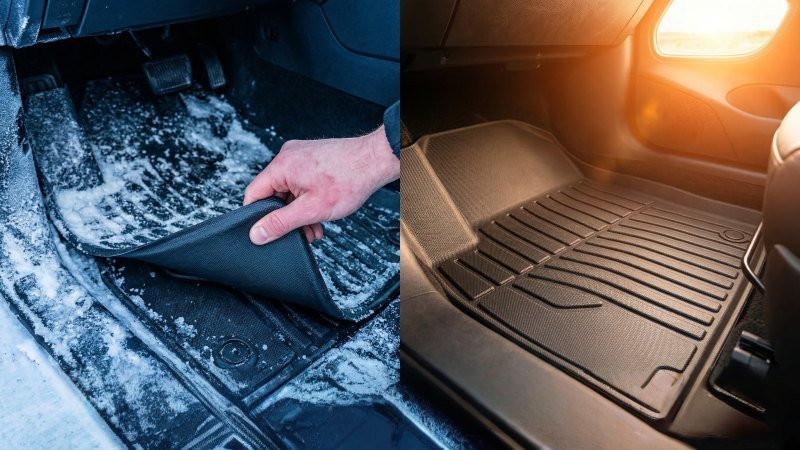
PVC materials struggle heavily here. As the temperature drops below freezing, PVC quickly loses its elasticity. It instantly becomes stiff, slippery, and highly prone to cracking under the weight of a driver’s foot.
TPE is engineered differently. Its unique molecular structure acts much like premium rubber suspension bushings. Just as those bushings must remain pliable to absorb road shock in winter, TPE mats must stay flexible to absorb foot pressure. TPE easily maintains its elasticity even in harsh conditions, often tested to perform reliably down to -40°C (-40°F).
Because of this structural advantage, TPE mats conform perfectly to the vehicle floor during harsh winters, providing consistent grip without ever shattering.
Structural Integrity Under Extreme Heat Exposure
Vehicle cabins turn into ovens during the summer. In direct sunlight, internal temperatures can easily exceed 60°C (140°F). This means floor mats have to resist severe heat distortion.
What happens to PVC? Under high temperatures, PVC softens dramatically, and the edges of the mats often curl upward. This warping creates a serious safety hazard since curled edges can easily interfere with the gas or brake pedals.
TPE, however, is a different story. Think of the hard plastic dashboard panels engineered to maintain their shape under the baking sun. Similarly, TPE mats retain their precise molded shape under intense cabin heat. They do not melt, stick to the vehicle’s carpet, or deform over time. This reliable structural integrity ensures the mats stay safely anchored in place year-round.
Enhancing Long-Term Wear Resistance and Load-Bearing Capacity
Floor mats endure constant, focused abuse—especially the driver’s side mat taking heavy friction from a heel pivoting between pedals. You don’t need me to tell you that high abrasion resistance is non-negotiable here.
PVC wears down relatively quickly under this concentrated friction, eventually developing thin spots and dangerous holes. Worse yet, PVC struggles to recover from heavy, concentrated loads.
Enter TPE, bringing superior tensile strength and abrasion resistance to the table. Its cross-linked polymer chains absorb friction effectively, very similar to how high-performance tire tread compounds handle road friction and heavy vehicle loads without rapid degradation. TPE bounces back from heavy pressure and strongly resists scuffing from heavy work boots or sharp heels.
Material Performance Comparison
| Performance Metric | PVC Mats | TPE Mats |
|---|---|---|
| Sub-Zero Flexibility | Poor (Cracks below freezing) | Excellent (Pliable down to -40°C) |
| Heat Resistance | Low (Warps around 60°C) | High (Holds shape up to 100°C) |
| Abrasion Resistance | Moderate (Prone to heel wear) | High (Resists concentrated friction) |
The payoff? Buyers get a much more durable product, and distributors deal with a fraction of the warranty returns.
Advancements in Custom Fit Manufacturing
How are modern manufacturing technologies changing the way car mats fit inside a vehicle?
Modern manufacturing utilizes advanced 3D laser scanning and high-pressure injection molding to create TPE car mats that fit each specific vehicle perfectly. This tech leap allows manufacturers to shift from flat, poorly fitting universal mats to custom high-wall designs that offer maximum coverage.
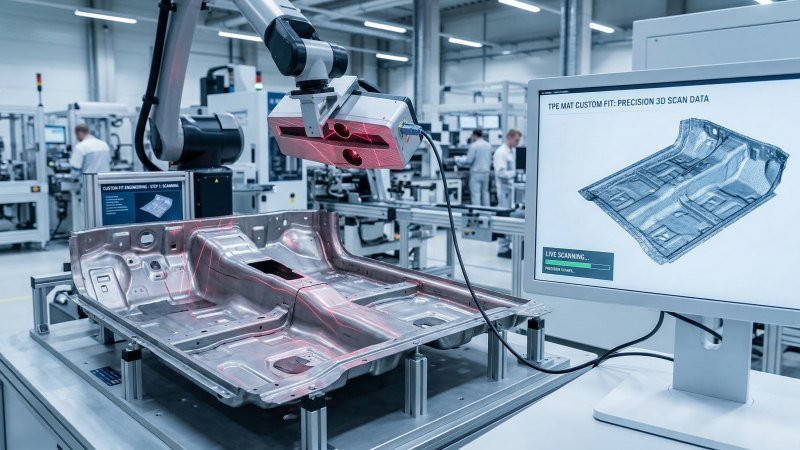
Leveraging 3D Scanning and Injection Molding Technologies
Have you ever bought a set of universal floor mats that bunched up near your pedals? In the past, manufacturers relied heavily on generic measurements and basic cutting tools. It’s no wonder those older PVC mats rarely fit well.
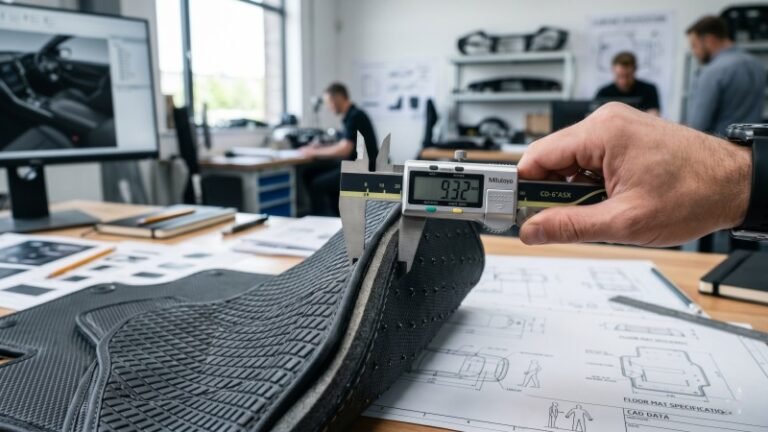
Fast forward to today, and the production of TPE mats is highly advanced. Engineers start by using precision 3D laser scanners inside the vehicle cabin, capturing every single contour, curve, and mounting point of the floorpan. It works very much like a CNC coordinate measuring machine (CMM) mapping out a complex engine block.
Next, this exact digital data is fed into a high-pressure injection molding machine. Unlike traditional compression molding, injection molding forces melted TPE material into a highly detailed steel mold, ensuring consistent material thickness and incredible dimensional accuracy.
The result? The finished TPE mat locks directly into the factory retention clips. It fits perfectly, preventing any dangerous slipping while driving.
Shifting from Universal Flats to Precision High-Wall Protection
Why settle for flat mats that let muddy water spill onto your carpets? Traditional PVC mats are usually flat, protecting only the bottom of your shoes. So when snow melts or a drink spills, the liquid quickly runs right off the edges and ruins the vehicle’s underlying carpet.
Thanks to TPE’s unique structural stability, manufacturers can now design high-wall floor mats featuring raised edges that create a deep tray.
Think of a modern pickup truck bed liner. A drop-in bed liner has tall sides to contain dirt and prevent damage to the truck’s side panels. Similarly, a high-wall TPE mat extends upward along the footwell walls, completely trapping liquid, mud, and debris within the mat itself.
| Feature Comparison | Flat PVC Mats | High-Wall TPE Mats |
|---|---|---|
| Edge Design | Flat, no liquid containment | Raised edges (beveled) |
| Spill Protection | Poor (Liquids run off edges) | Excellent (Contains spills completely) |
| Floor Coverage | Basic bottom coverage only | Full 3D footwell protection |
Let’s face it, this high-wall design is a massive upgrade. It makes cleaning incredibly easy—just remove the mat and dump the dirt outside. Consumers heavily prefer these custom-fit TPE liners over older, flat designs for a reason.
Capitalizing on the Premium Accessory Market Segment
Why are automotive businesses strategically shifting their focus toward premium TPE accessories instead of budget options?
Automotive businesses are transitioning to TPE because it directly targets the lucrative premium accessory segment. This advanced material effortlessly satisfies strict OEM standards, meets rising consumer demands for family-safe interiors, and provides significantly higher profit margins compared to commodity plastics.
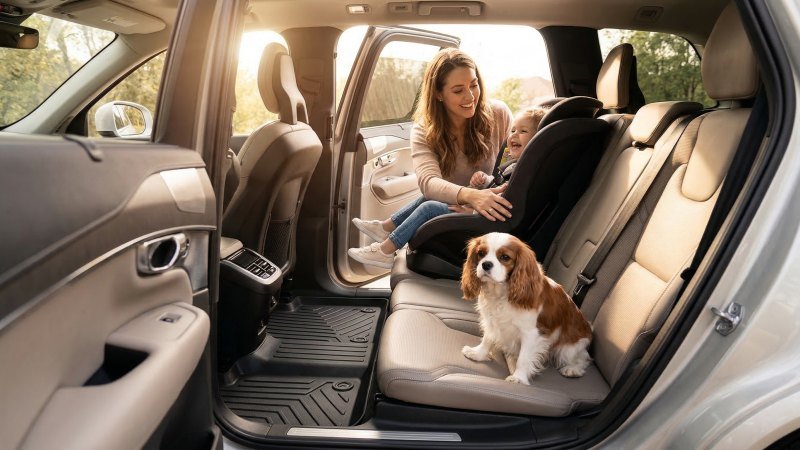
Addressing End-User Demand for Child and Pet Safety
Modern buyers view their vehicles as extensions of their homes. Naturally, they demand high safety standards for their children and pets. PVC mats often feature cheap, hard surfaces that become incredibly slippery when wet. With PVC, pets slide around during transit, and children can easily slip when climbing into the cabin.
TPE solves this by offering a high-friction, tactile surface. Think of the specialized anti-slip step treads installed on heavy-duty commercial trucks that securely grip work boots in wet conditions. Similarly, TPE provides exceptional, reliable grip for muddy paws and wet sneakers.
Better yet, TPE is completely hypoallergenic and exceptionally easy to sanitize. It features a non-porous surface similar to the high-grade weather seals used around car doors; it does not absorb moisture. Parents can quickly wipe away spills without worrying about trapped bacteria or mold growth.
Aligning with Automaker OEM Standards
To sell directly to car manufacturers, parts must pass rigorous Original Equipment Manufacturer (OEM) testing. Automakers absolutely do not accept substandard materials for their factory-installed accessories.
PVC frequently fails modern OEM interior testing protocols. For example, it often struggles with the industry-standard fogging test, which measures how much chemical residue a material deposits onto the inside of a windshield. TPE easily passes these stringent tests because it is highly chemically stable.
To top it off, TPE meets critical automotive flammability standards, such as the FMVSS 302 regulation. (Always verify the exact compliance certificates with your supplier before entering OEM contracts, as ratings vary by automaker). By hitting these high benchmarks, TPE allows aftermarket brands to compete directly alongside Tier 1 suppliers.
Utilizing High-Margin Opportunities in the Auto Parts Supply Chain
Selling budget PVC mats is a constant race to the bottom with incredibly thin profit margins. TPE, however, blasts the door wide open to the premium pricing tier.
Are we really surprised that consumers willingly pay more for precision and peace of mind? This creates a highly profitable opportunity for distributors and retailers. Consider the difference between standard semi-metallic brake pads and premium ceramic brake pads. Both stop the car. However, the ceramic pads offer a cleaner, quieter, premium experience that commands a much higher retail price and a better profit margin. TPE operates on the exact same business model.
| Market Segment | PVC Floor Mats | TPE Floor Mats |
|---|---|---|
| Target Audience | Budget-conscious buyers | Premium and OEM buyers |
| Retail Price Point | Low | Medium to High |
| Profit Margin Potential | Low (High volume needed) | High (Premium markup) |
Beyond the initial sale, TPE slashes long-term costs in the supply chain. Because the material is highly durable, businesses experience drastically fewer warranty claims, and retailers deal with fewer product returns. Bottom line: stocking TPE improves both brand reputation and your profit margins.
Conclusion
The global car mat market has permanently shifted. Let’s be real: clinging to outdated PVC materials is a losing game. TPE has proven itself as the heavyweight champion by offering unmatched extreme-weather durability, total elimination of toxic odors, and precise 3D-molded fitment. Beyond just compliance, embracing TPE lets businesses tap directly into highly profitable premium market segments.
Upgrading to TPE is more than just a material change; it is a strategic business decision that elevates product quality and customer satisfaction. If you are ready to modernize your product offerings and explore high-margin automotive accessories, please contact us today!