-
Whatsapp +86 13526654721
-
Email: sales@carmatrolls.com
-
Address: AUX Industrial Park, Shangjie District, Zhengzhou City, Henan Province, China
-
Whatsapp +86 13526654721
-
Email: sales@carmatrolls.com
-
Address: AUX Industrial Park, Shangjie District, Zhengzhou City, Henan Province, China

5 Common Mistakes New Car Mat Factories Make (And How to Avoid Them)
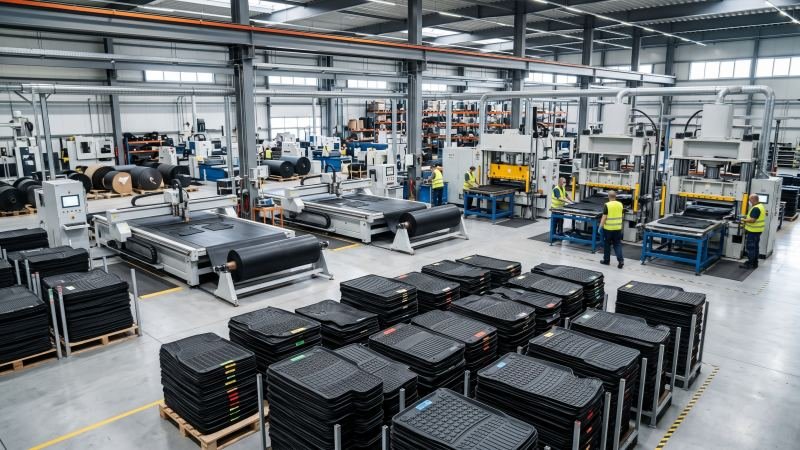
Why do so many new car mat manufacturing businesses fail within their first year of operation?
New car mat factories typically fail because they mismanage their initial investments and operational processes. To succeed, owners must select the correct specialized machinery, secure precise 3D vehicle floor data, design a lean production layout, enforce strict quality control, and scale capacity sustainably without multiplying existing inefficiencies.
Investing in the Wrong Production Equipment
The initial machinery purchase is where many new car mat factories make their most expensive errors.
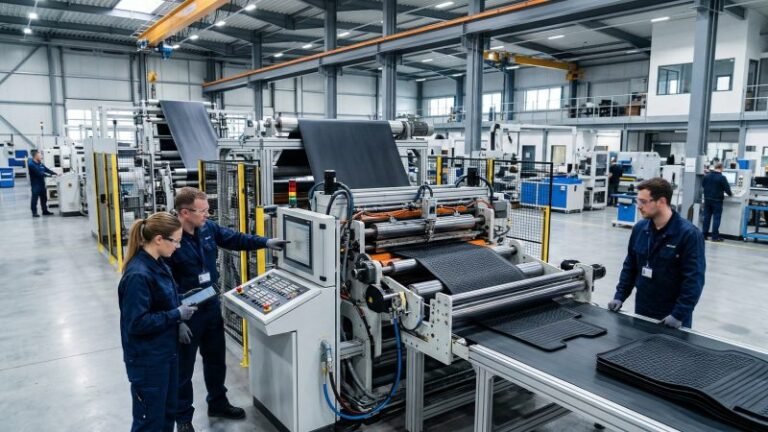
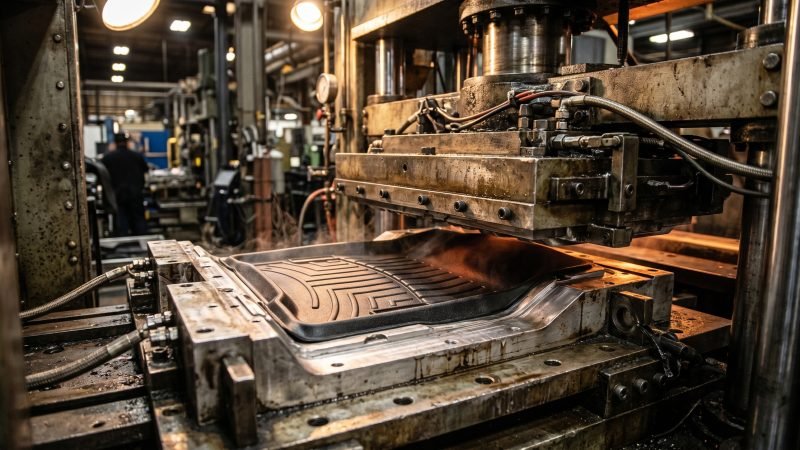
Many new car mat factories lose money by buying machinery based only on the lowest price. This mistake causes material compatibility issues, frequent machine breakdowns, and high manual labor costs. To avoid these problems, owners must match equipment to specific materials, invest in automation, and accurately calculate the total return on investment.
Overlooking Material Compatibility
Many new factory owners buy a generic thermoforming machine. Then, they try to use it for everything. Here’s the reality: different car mat materials need specific temperatures and pressures. Take Thermoplastic Elastomer (TPE)—it behaves very differently than PVC or standard rubber.
If you put TPE into a basic PVC vacuum forming machine, the results are terrible. This is like trying to thermoform rigid trunk liners using a low-pressure blister machine designed for thin packaging. The machine simply cannot provide the correct clamping force or cooling speed. The end result? The car mats will shrink or warp after cooling.
To make this clear, look at the equipment needs for common materials:
| Material Type | Primary Equipment Needed | Key Process Requirement |
|---|---|---|
| TPE | Injection Molding Machine or Blister Vacuum | High clamping force, precise cooling water lines. |
| PVC / Leather | Sewing Machines, Hot Press | Stable heating plates, high-speed stitching. |
| Rubber | Vulcanizing Press | High temperature and extreme pressure. |
Different machines have vastly different technical limits. When setting up your production line, remember that optimal heating temperatures and pressure ratings can vary based on your specific material blend. Bottom line: always verify the exact parameter ranges with your equipment supplier before starting mass production.
Sacrificing Automation for Lower Upfront Costs
It is very tempting to buy manual equipment to save money. Why spend 15,000 dollars on a machine when manual hand-cutting tools cost only 2,000 dollars? The answer lies in daily output and scrap rates.
Manual cutting requires highly skilled workers. Even the best workers get tired. As you’d expect, cut edges become uneven over an eight-hour shift. On the flip side, an automated CNC oscillating knife cutter works perfectly every single time. It never gets tired.
In the automotive accessory industry, precision is everything. Real-world factory data shows that automated cutting reduces scrap material by up to 15%. Look at the floor layout: one automated CNC machine can easily replace three manual cutting workers. The payoff? That higher upfront cost of an automated machine pays for itself fast through sheer labor savings.
The Right Way to Evaluate Machinery ROI
You must calculate your Return on Investment (ROI) correctly. The initial price tag on a machine is just a small part of the story. Smart operators know to look at the Total Cost of Ownership (TCO).
What exactly does TCO include? It includes the purchase price, shipping, daily energy use, maintenance parts, and labor costs. Are you really saving money if a cheap machine doubles your daily electricity bill?
Consider this: a slightly more expensive injection molding machine might use energy-saving servo motors. These advanced motors can reduce daily power consumption by up to 40%. On top of that, a high-quality machine produces fewer defective car mats. When calculating ROI, always divide your total yearly operating costs by the number of perfect car mats you produce. That gives you the true cost per unit, which is the only metric that matters for profitability.
Relying on Inaccurate Vehicle Floor Data and Molds
Even with high-quality materials, new manufacturers often face massive customer returns due to a fundamental flaw in their design process.
High return rates frequently occur because factories rely on outdated vehicle floor data and cheap molds. This mistake leads to poor product fitment, which can block vehicle pedals and create severe safety hazards. To ensure a perfect fit, factories must source precise 3D laser scanning data and enforce strict acceptance criteria before mass-producing any mold.

The High Cost of Poor Fitment
In the automotive accessory business, perfect fitment is your most important feature. Customers buy custom floor mats to protect their vehicles seamlessly. What happens when a mat does not fit properly?
Right off the bat, poor fitment creates serious safety risks. A mat that is too large might slide forward. That means it can wedge under the gas or brake pedals. Beyond safety, inaccurate mats lead to instant customer returns. Industry data shows that over 60% of custom car mat returns result directly from sizing errors.
Using inaccurate mold data is like a CNC mill cutting dashboard trim without proper calibration. The final product will simply never slot into place. Let’s be clear: shipping poorly fitted mats destroys your brand reputation. You waste money on shipping, raw materials, and customer service. Nailing the floor data right is absolutely critical for survival.
Sourcing Precise 3D Scanning Data
You cannot create a perfect mold without perfect data. In the past, factories used paper templates or simple measuring tapes. Today, these manual methods are completely obsolete.
Would you trust a paper template to mill a precision engine block? Of course not. The exact same logic applies to floor mats. To achieve high precision, modern factories use industrial 3D laser scanners. These devices capture millions of data points across the vehicle floor. This creates a perfect digital twin of the car’s interior.
When choosing scanning equipment, optical precision usually ranges from 0.02mm to 0.1mm. Blue light 3D scanners are highly recommended for the industry because they capture dark automotive carpets more accurately than older laser technologies.
Here is a comparison of common data sourcing methods:
| Data Sourcing Method | Accuracy Level | Cost | Recommendation |
|---|---|---|---|
| Manual Paper Templating | Very Low | Low | Never use for custom molding. |
| Buying Shared Online Files | Medium | Low | Risky. Data is often outdated or modified. |
| In-House 3D Laser Scanning | Very High | High | Best for quality control and new car models. |
Is buying shared online data files worth the risk? Usually, it is not. A tiny one-centimeter error in a shared file will ruin your entire expensive aluminum mold.
Establishing Strict Mold Acceptance Criteria
Sourcing great digital data is only half the battle. But here’s the catch: you must ensure the physical mold matches that data perfectly. Factory owners often accept a new mold simply because it looks correct visually. This is a massive mistake.
Would you sign off on a massive aluminum mold just because it looks okay sitting on a desk? You must build a standard operating procedure for mold acceptance. Before paying the mold maker, you need a physical trial.
- Verify Material Shrinkage: TPE and rubber shrink as they cool. Did the mold maker calculate the correct shrinkage rate for your specific material?
- Test with Real Vehicles: Always press a sample mat and install it into the actual target vehicle. Check the edges near the door sills and seat tracks.
- Inspect Surface Textures: Ensure the anti-slip textures are deeply and evenly engraved. Poor engraving causes premature wear on the final product.
By strictly testing every single mold, you stop errors before mass production begins. By doing this, you protect your materials and guarantee customer satisfaction.
Poor Factory Layout and Workflow Design
Why do so many new car mat factories suffer from delayed orders even when their machines run constantly?
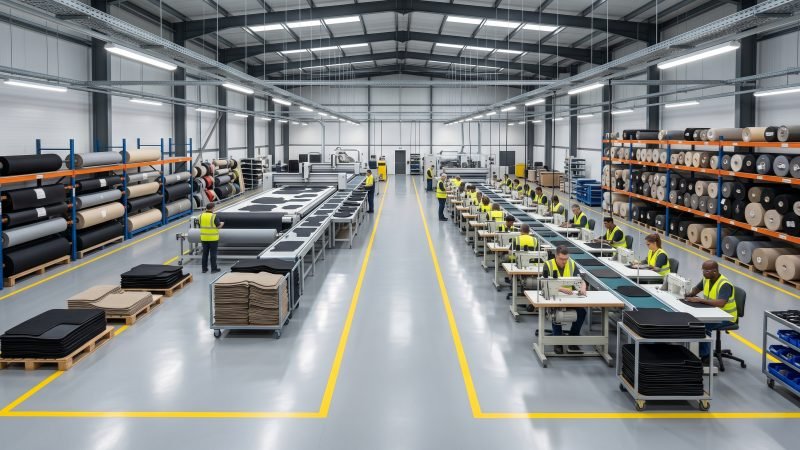
New car mat factories suffer from delayed orders because poor floor layouts force workers to constantly move materials back and forth across the shop. This chaotic workflow creates severe bottlenecks at the sewing and trimming stations. To fix this, managers must design lean production routes, position complementary machines close together, and optimize material storage for quick access.
Common Bottlenecks in the Assembly Line
What exactly is a production bottleneck? It is simply the slowest point in your factory. In car mat manufacturing, the thermoforming machine is usually very fast. But here’s where it usually jams up: edge binding and logo stitching are often much slower.
Suppose your high-speed press produces a molded mat every 45 seconds. Meanwhile, the sewing station takes three minutes to bind the edges. This speed difference creates a massive bottleneck. Unfinished mats will quickly pile up on the floor. This situation is exactly like an automated die-cutting machine feeding hundreds of parts into a single manual edge-binding station. The harsh reality is that the entire production line slows down to the speed of the weakest link.
Real industry data shows that up to 30% of daily production time is wasted simply waiting for the next station. To fix this, you have to balance the cycle times of your fast and slow machines. You can solve this by assigning three sewing stations to every single molding press.
Designing Lean Production Routing
How should materials flow through your building? Materials should move in a continuous, logical path. Too often, beginners place machines randomly wherever they fit. The result? Workers walk miles every week just carrying heavy semi-finished mats.
Veteran managers know better. They use a lean U-shaped or straight-line layout. First, raw rolls enter at the cutting station. Next, the cut pieces move directly to the heating and pressing area. Finally, they slide straight to the sewing and packaging tables.
“Every extra step a worker takes carrying a car mat is wasted money.”
Let us look at a quick comparison of common floor layouts:
| Layout Type | Material Travel Distance | Space Efficiency | Best Factory Shape |
|---|---|---|---|
| Spaghetti (Random) | Very High | Poor | Never recommended. |
| Straight Line | Low | Good | Long, narrow buildings. |
| U-Shaped Cell | Very Low | Excellent | Standard square floors. |
By implementing a U-shaped manufacturing cell, you drastically minimize forklift traffic. Even better, workers can pass parts to each other across the aisle easily.
Optimizing Raw Material and Finished Goods Storage
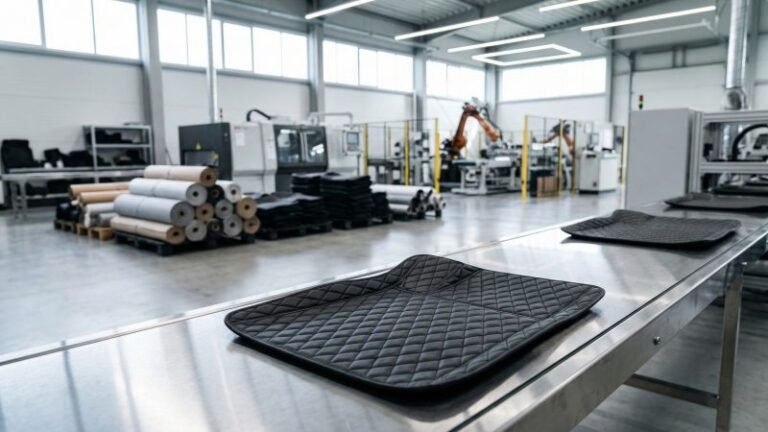
Proper storage is critical but often ignored. Car mat materials take up a massive amount of space. These include heavy rolls of TPE, PVC leather, and foam backing. If you stack them poorly, you waste valuable production floor area.
Rule number one: always use a First-In-First-Out (FIFO) racking system. Heavy rolls of synthetic leather can develop permanent creases if they sit under pressure for too long. Rule number two: keep your raw materials stored as close to the cutting machines as possible. This eliminates unnecessary forklift trips.
Beyond layout, consider the storage environment. Some backing adhesives and specialized TPE blends are highly sensitive to extreme temperatures and humidity. Since optimal storage temperatures can vary greatly depending on the chemical composition, you should always verify the exact storage temperature ranges with your material supplier.
For finished goods, always use vertical racking. Custom 3D floor mats are bulky and cannot be crushed flat. Placing them in rigid, suspended racks prevents unwanted deformation before shipping.
Implementing Weak Quality Control Standards
Product recalls can destroy a new brand just months after its first production run.
Many new car mat factories suffer severe recalls because they skip critical environmental and durability testing on their raw materials. This mistake allows toxic odors, rapid wear, and cracking to reach the final consumer. To guarantee product safety, manufacturers must implement rigorous environmental material screening, conduct intensive stress tests, and enforce a strict standard operating procedure for daily quality assurance.
Skipping Raw Material Environmental Testing
Many factory owners assume that brand-new raw materials are automatically safe. Let me tell you, that’s a dangerous assumption. Car interiors become incredibly hot during the summer. A roll of TPE or PVC might smell perfectly fine at room temperature. But bake it in the summer sun, and it can release harmful Volatile Organic Compounds (VOCs).
Would you bet your entire brand reputation on a roll of untested synthetic rubber? If you skip thermal chamber testing, you risk poisoning your customers. This mistake is exactly like automotive dashboard plastics cracking or fading under UV light because the raw resin lacked proper UV stabilizers. Both situations lead to immediate product failure and angry buyers.
The fix is simple: you must test your materials at extreme temperatures. Industry standards often require heating material samples to 65°C (149°F) to measure chemical off-gassing accurately. Since acceptable VOC limits and exact thermal testing standards can vary based on regional safety regulations, you should always verify the exact compliance parameters with a certified testing lab.
Inadequate Durability and Stress Testing
Car mats endure brutal daily abuse. The driver’s heel constantly grinds against the mat. Mud, snow, and road salt attack the surface. Without proper stress testing, your mats might wear completely through in less than six months.
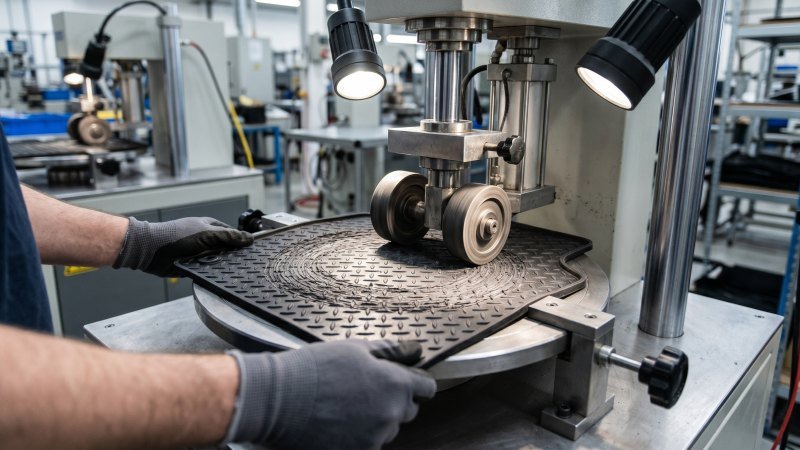
A simple visual inspection cannot predict long-term wear. That’s exactly why professional factories use mechanical stress tests. They use Taber abrasion machines to simulate years of foot friction. They don’t stop there; they use cold-flex testing. Cheap rubber or inferior TPE blends will become brittle and shatter in freezing winter temperatures. Testing material durability is identical to testing car seat upholstery; the fabric must endure thousands of high-friction passenger entry and exit cycles without tearing.
Consider these essential durability tests for your factory:
| Test Type | Purpose | Equipment Used | Target Standard |
|---|---|---|---|
| Abrasion Testing | Simulates heel friction over time. | Taber Abraser | Minimal material loss after 1,000 cycles. |
| Cold Flex Testing | Prevents winter cracking. | Cryogenic Chamber | No surface cracks at -30°C. |
| Tensile Strength | Measures tear resistance. | Universal Testing Machine | Withstands high pulling force. |
Building a Standard Operating Procedure for Quality Assurance
Quality does not happen by accident. You must build a written Standard Operating Procedure (SOP) for Quality Assurance (QA). If you rely entirely on a worker’s personal judgment, your product quality will always fluctuate.
A strong QA system inspects the product at multiple stages. It never waits until the very end of the line.
- Incoming Material Inspection: Check the density and color consistency of every new raw material roll before cutting.
- In-Process Inspection: Measure the thickness of the mat immediately after thermoforming. Reject any parts that thin out too much in the corners.
- Final Packing Inspection: Verify the binding thread tension and ensure the anti-slip backing is fully attached to the mat.
“A robust QA system catches defects when they cost pennies on the factory floor, not after they cost dollars in customer returns.”
By strictly enforcing this written SOP, you remove guesswork from your assembly line. The end game? You guarantee that every single mat leaving your facility meets your premium brand standards.
Scaling Production Capacity Too Quickly
Why do so many new car mat factories go bankrupt right after securing their first massive wholesale order?
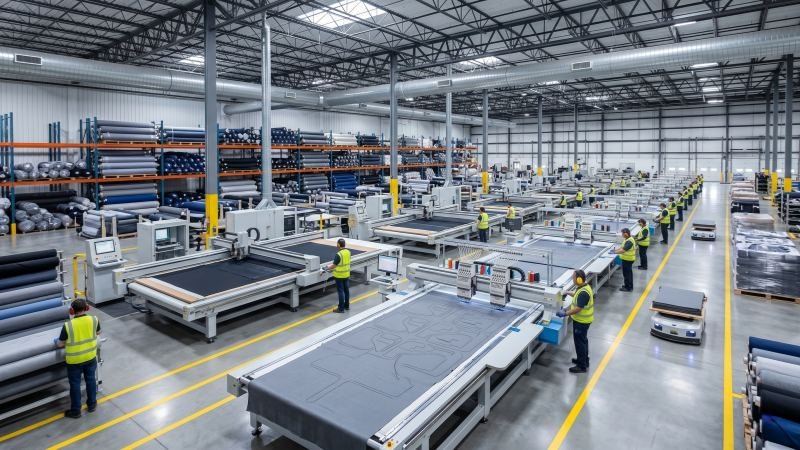
New factories go bankrupt during expansion because they scale up before fixing their broken operational processes. This massive mistake multiplies existing inefficiencies, skyrockets scrap rates, and drains cash flow instantly. To avoid failure, manufacturers must stabilize their base operations first, balance hiring with smart technology upgrades, and follow a phased, sustainable growth strategy.
The Danger of Multiplying Inefficiencies
What happens when you speed up a broken process? You just make garbage faster. Imagine turning up the feed rate on a CNC milling machine when the spindle is already vibrating. The machine will not produce more perfect parts. Instead, it will instantly shatter the cutting tool. The exact same principle applies to car mat manufacturing.
Let us look at the real numbers. Suppose your current production line has a 5% scrap rate. When you produce 100 mats a day, you throw away five mats. This loss feels small and manageable. However, what happens when you rapidly scale up to produce 5,000 mats daily? You suddenly create 250 defective mats every single day.
When the dust settles, this massive waste of raw materials destroys your profit margins completely. Worse yet, your rework time increases exponentially.
“Scaling a bad manufacturing process does not increase your profits; it only increases your losses.”
The takeaway here is you must perfect your baseline operations first. You must achieve a scrap rate of less than 1% before you even consider adding more machines to your factory floor.
Balancing Workforce Expansion with Technology Upgrades
When large orders suddenly arrive, inexperienced managers often panic. Their very first instinct is to hire dozens of temporary workers. Let’s be honest: throwing cheap labor at a production spike is a terrible idea.
Temporary workers lack the necessary muscle memory. Because of that, their manual trimming and edge sewing work will always be inconsistent. Not to mention, managing a suddenly massive workforce creates heavy administrative burdens.
Rather than hiring an army of untrained workers, you must invest in targeted technology upgrades. For example, you can replace manual binding stations with fully automatic dual-head sewing machines. This advanced equipment maintains a constant cycle time regardless of your daily order volume. The hard data proves it: automated binding upgrades reduce direct labor dependency by up to 40%.
Optimal sewing speeds and needle penetration forces must be carefully calibrated depending on the thickness of your specific backing material, ensuring you don’t burn through thread or snap needles as production speed increases.
Sustainable Growth Strategies for Manufacturing
How do you grow your business safely? You must follow a strictly phased, sustainable growth strategy. Never double your factory floor space or buy ten new machines all at once. This traps your cash in physical assets.
Here’s the veteran move: you must squeeze every ounce of efficiency out of your current setup. Start by mastering a single eight-hour shift. Make sure the output is perfectly predictable. Once that shift runs flawlessly, simply add a second shift. This allows you to double your daily production using the exact same equipment.
You should only purchase new, duplicate machinery when your current equipment utilization consistently hits 85%. Here is a proven, phased roadmap for safe factory expansion:
| Growth Phase | Expansion Action | Trigger Metric to Advance |
|---|---|---|
| Phase 1 | Optimize single-shift operations. | Scrap rate falls below 1%. |
| Phase 2 | Add a second daily work shift. | First shift hits 85% capacity. |
| Phase 3 | Upgrade existing manual stations to automated machines. | Labor costs exceed 20% of revenue. |
| Phase 4 | Purchase duplicate primary equipment (e.g., new presses). | Two shifts run at 85% capacity safely. |
By following this disciplined approach, your factory will grow profitably. You will protect your cash flow and ensure consistent product quality at every single stage of expansion.
Conclusion
Starting a profitable car mat factory requires much more than just purchasing raw materials and renting a building. It demands a strategic, calculated approach to every single step of the manufacturing lifecycle. By avoiding these five critical mistakes—from rushing equipment purchases and relying on poor vehicle data to ignoring layout efficiency, skipping quality control, and scaling too aggressively—you can protect your capital and build a resilient brand. Take the time to build a solid operational foundation first. If you need professional advice on optimizing your production processes or selecting the right industry machinery, feel free to contact us today.