-
Whatsapp +86 13526654721
-
Email: sales@carmatrolls.com
-
Address: AUX Industrial Park, Shangjie District, Zhengzhou City, Henan Province, China
-
Whatsapp +86 13526654721
-
Email: sales@carmatrolls.com
-
Address: AUX Industrial Park, Shangjie District, Zhengzhou City, Henan Province, China

Sourcing Car Mat Machinery from China: A Step-by-Step Guide to Finding Reliable Suppliers
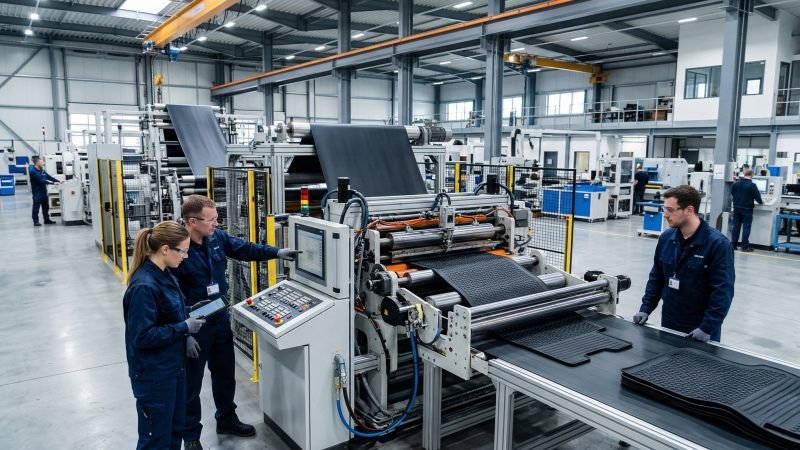
How can you successfully navigate the complex process of sourcing reliable car mat manufacturing equipment from China without risking your capital?
You must implement a structured procurement strategy that includes verifying actual manufacturing credentials, mandating strict pre-shipment quality tests, specifying global core components, and securing legally binding contracts. This comprehensive approach mitigates financial risk and ensures the imported machinery meets your exact production and local safety standards.
Verifying Manufacturer Credentials and Capabilities
How can you be absolutely sure a machinery supplier in China can actually build the equipment you need?
You must check their official business licenses, review their past export records, and perform physical audits. This confirms they own an actual manufacturing facility. It proves they are not a middleman who raises prices and lacks control over the final product.
Differentiating True Factories from Trading Companies
When you search online, practically everyone claims to be a factory. The reality is, a large number are just trading companies. Why does this matter? A trading company buys machines from a factory and simply resells them to you. For instance, a trading company might add a 15% to 20% markup on a $50,000 TPE car mat vacuum forming machine.
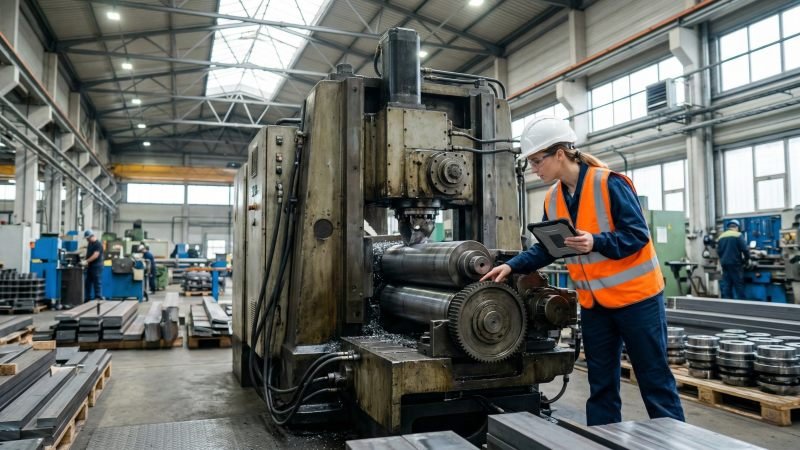
More importantly, buying heavy machinery demands direct technical support. Think of a trading company like a general distributor selling various light industrial goods. A true factory is the actual manufacturer machining the heavy steel rollers and assembling the heating ovens specifically for car mat production lines. If a vacuum pump fails, the manufacturing factory knows exactly how to fix it immediately. The distributor, on the other hand, must call the factory first. This causes unnecessary delays. Bottom line: cutting out the middleman saves you serious money and downtime.
You can tell the difference by looking closely at their official business license.
| Feature | True Manufacturing Factory | Trading Company |
|---|---|---|
| Business Scope | Lists words like “manufacture,” “produce,” or “assemble.” | Lists words like “wholesale,” “trade,” or “export.” |
| Product Catalog | Highly focused on one type of machine (e.g., only car mat machinery). | Very broad (sells car mat machines, packaging machines, and random parts). |
| Location | Usually located in industrial zones or industrial parks. | Often located in city center office buildings. |
Essential Certifications to Look For
A reliable factory will hold recognized industry certifications. These documents prove they follow strict, standardized processes. First, ask for their ISO 9001 certificate. This shows the company has a verified quality management system for their equipment assembly line.
Second, check for regional safety certifications. If you are importing to Europe, the machine must have a CE mark. If you are in the United States, look for UL or OSHA compliance. Would you trust a high-temperature TPE melting oven built by a team with no documented safety standards? Certainly not.
That said, standard ratings like CE or UL can still vary based on the specific electrical components used. So, always verify the exact certification scope with the supplier before finalizing your order.
Let’s be real: do not just accept a digital picture of a certificate. Always verify the unique certificate number on the issuing agency’s official website. Fake certificates are common in the market. Taking five minutes to check online is absolutely crucial.
Conducting Effective Factory Audits
Never base your buying decision solely on a nice website or a sleek product catalog. You need to see the actual production floor. If you cannot travel to China, you must conduct a factory audit using a reliable third party.
You can hire independent inspection agencies like SGS or TÜV. They will send a trained inspector to the factory on your behalf. Generally, a third-party audit costs between $300 and $500 per day in China. This is a very small price to pay when you are investing in a $60,000 production line.
During the audit, the inspector will check several critical areas. They will look closely at the factory’s production capacity. Do they have the heavy CNC milling machines needed to cut the custom car mat molds? They will also count the workers and check the inventory of raw materials.
Consider inspecting a textile mill before ordering thousands of woven carpets. You would check their looms and yarn inventory first. Similarly, you must thoroughly inspect the car mat machinery supplier’s floor. This proves they are actively building vacuum forming machines or PVC extruders, rather than just outsourcing the work to a cheaper sub-contractor.
Ensuring Equipment Quality Before Shipment
How can you guarantee your new car mat machinery works perfectly before it ever leaves the Chinese factory?
You must mandate a rigorous pre-shipment quality control process that includes physical prototype testing, a comprehensive Factory Acceptance Test (FAT), and the strict verification of all internal core components. This proactive approach prevents costly defects and ensures the equipment meets your exact production standards before final payment is released.
Requesting Material Samples and Prototype Testing
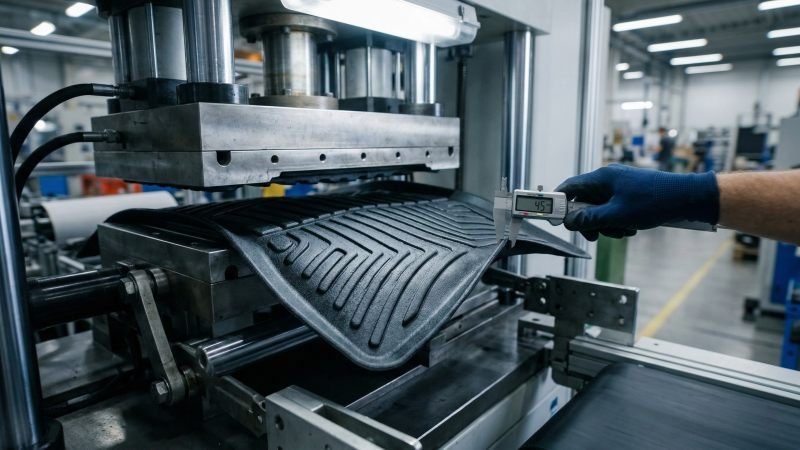
Before shipping, the machine must actually produce car mats. That means you absolutely must send your specific raw materials to the supplier for testing. For instance, testing a PVC coil mat extrusion line with cheap, recycled filler plastic is completely useless. You need to test your exact virgin PVC pellets and colorants. After all, what good is a flawless test run if it’s using the wrong plastic? The machine needs to prove it can handle your exact material specifications under load.
During this test, you must measure the output carefully. For a typical TPE vacuum forming machine, a standard production cycle usually takes between 45 to 60 seconds. However, exact heating temperatures and cycle times can vary significantly based on your specific polymer blend and the mold thickness. Always verify the exact operating temperature range and expected cycle times directly with the supplier to ensure compatibility. After testing, have the factory send the physical prototype mats to you via express air freight. You must manually check the mat’s edge sealing, thickness uniformity, and overall surface finish. This physical proof is non-negotiable.
The Importance of Factory Acceptance Testing
A Factory Acceptance Test, commonly known as FAT, is a formal inspection process. It happens at the manufacturer’s facility long before shipping. During an FAT, the factory runs the car mat machinery continuously to prove its reliability. Why is this critical? Because once a 5-ton industrial machine arrives at your facility, returning it across the ocean is a logistical nightmare. Would you ever sign off on a $60,000 asset without seeing it run under real-world pressure?
You should require an 8-hour continuous test run. This sustained operation easily exposes hidden flaws. For example, hydraulic oil might overheat after three hours of heavy use. Alternatively, the programmable logic controller (PLC) might freeze during continuous cycling. Think of it like running an automated car mat cutting machine at maximum speed for an entire shift just to check for blade deflection and track alignment. If the equipment fails the FAT, the factory must fix it at their own expense immediately.
| Inspection Type | Test Duration | Primary Focus Area | Reliability Level |
|---|---|---|---|
| Basic Visual Check | 1 Hour | Paint finish, missing bolts, overall dimensions. | Very Low |
| Standard FAT | 4 to 8 Hours | Continuous cycling, temperature stability, software. | High |
| Advanced FAT | 2 to 3 Days | Maximum speed tests, emergency stop triggers, yield. | Excellent |
Specifying Globally Recognized Core Components
The heavy steel frame of your machine is built in China. The internal moving parts, on the other hand, should never be generic. You must specify globally recognized brands for all core components. This drastically improves the machine’s lifespan. Better yet, it ensures you can quickly find replacement parts locally when necessary. Why let a burnt-out $50 generic contactor shut down a $60,000 production line?
If a cheap, unknown drive motor burns out, finding a replacement is a massive headache. On the flip side, if you spec a standard Siemens motor, you can buy a replacement anywhere in the world. This is identical to upgrading a high-volume plastic injection molding machine; you always use universally recognized hydraulic pumps for guaranteed clamping reliability. Don’t leave this to chance—dictate these parts in your initial order.
Focus on specifying the following critical areas:
- Programmable Logic Controllers (PLCs): Request brands like Siemens, Mitsubishi, or Omron. They offer stable software for automated cutting and forming.
- Electrical Contactors and Breakers: Specify Schneider Electric or ABB. They prevent electrical fires and damaging voltage spikes.
- Hydraulic Valves and Pumps: Demand Bosch Rexroth or Yuken. They provide consistent pressure for heavy mold clamping.
- Servo Motors: Require Panasonic or Yaskawa. They ensure precise material feeding and exact cutting accuracy.
By controlling the component list, you build a significantly better, more reliable machine.
Securing Reliable After-Sales Support
What happens when your imported car mat machinery breaks down thousands of miles away from its manufacturer?
You must establish a guaranteed after-sales support protocol before completing your purchase. This requires evaluating the supplier’s English technical documentation, confirming comprehensive technical training, and securing a clear warranty with fast access to critical spare parts.
Assessing Technical Training and English Manuals
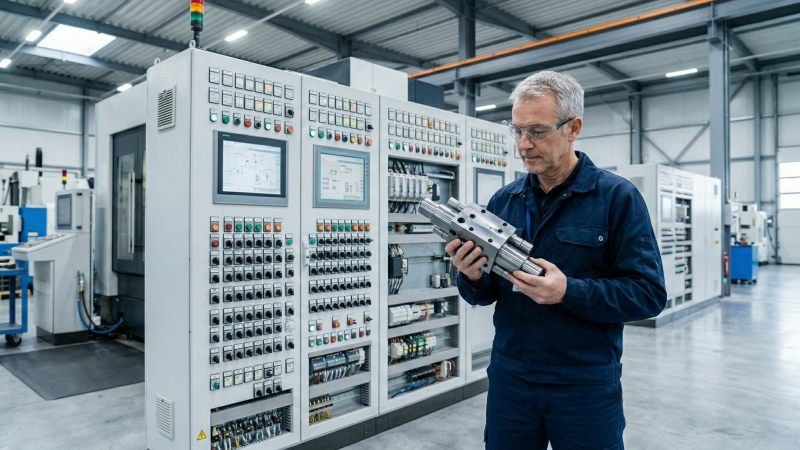
When your new vacuum forming machine arrives, your operators must know how to run it. That means demanding comprehensive English manuals. These manuals must include detailed electrical schematics and hydraulic circuit diagrams. Often, overseas suppliers provide poorly translated documents. The result? Your production line grinds to a halt while your maintenance crew tries to decipher bad translations.
Beyond the paperwork, insist on live video training sessions. A reliable supplier will guide your technicians through the initial setup via video call. This is similar to setting up a complex multi-layer TPE extrusion line. You need direct, real-time guidance to calibrate the heating zones and roller pressure correctly.
Always check the machine’s software interface language. Sometimes, the touchscreen control panel only displays Chinese characters. You must ensure the supplier programs a clear English interface before shipment to prevent daily operating errors.
Evaluating Warranty Terms and Spare Parts Availability
A standard industrial machinery warranty typically lasts for 12 months. This period usually starts from the date on the bill of lading. It pays to read the fine print, though. Typically, the warranty covers major components like the main drive motor or the central processor.
Make no mistake, it almost never covers consumable wear parts. For instance, the heating elements in a TPE melting oven will naturally degrade over time. Similarly, silicone sealing strips require regular replacement. This is exactly like replacing dull oscillating blades on a digital car mat cutting table. It is simply a routine operational expense.
| Component Type | Examples | Typical Warranty Status | Procurement Strategy |
|---|---|---|---|
| Core Components | PLCs, Servo Motors, Main Frame | Covered (Usually 12 Months) | Request immediate replacement if defective under normal use. |
| Consumable Parts | Heating Tubes, Silicone Strips, Fuses | Not Covered | Purchase extra parts during the initial machine order. |
To stay ahead of the curve, demand a detailed list of these consumable parts. Even better, negotiate to include a free batch of these spare parts inside your shipping container. This simple move prevents highly expensive express air-freight costs later. And before you sign anything, evaluate their response time for critical spare parts. If a custom hydraulic valve fails, you must know exactly how quickly they can dispatch a replacement to keep your line moving.
Handling Technical Specifications and Compliance
How can you ensure an industrial machine built overseas will safely and legally operate inside your local facility?
You must explicitly define your exact electrical requirements and safety regulations in your initial order. By customizing the voltage and installing mandatory physical guards, you prevent instant equipment failure. Consequently, you avoid severe legal penalties during local inspections.
Customizing Voltage for Your Local Grid
China operates on a standard three-phase industrial power grid of 380V at 50Hz. However, your manufacturing facility might use a completely different standard. For instance, plants in the United States typically use 480V or 240V at 60Hz. Try plugging a standard Chinese machine straight into your wall, and you’re asking for a blown panel.
What happens if you ignore this electrical difference? If you run a 50Hz hydraulic pump motor on a 60Hz grid, the motor will spin 20% faster. The inevitable result? It overheats and destroys itself before you’ve made a single mat. This is exactly like wiring a 100kW industrial heating oven to an underrated electrical panel. The entire system will overheat and trip.
To solve this, you must instruct the supplier to customize the internal electrical components. They can install a reliable step-up or step-down transformer directly inside the machine’s cabinet. Alternatively, they can equip the machine with motors designed specifically for your frequency. Because local industrial voltage can vary based on your specific facility’s electrical infrastructure, do yourself a favor and always verify your exact power specifications first. Then, explicitly confirm these customization details directly with your machinery supplier.
Meeting Regional Safety Standards
Every country enforces strict industrial safety laws. You must ensure your car mat machine physically complies with these local regulations. Ignore this, and government inspectors won’t hesitate to shut down your line immediately.
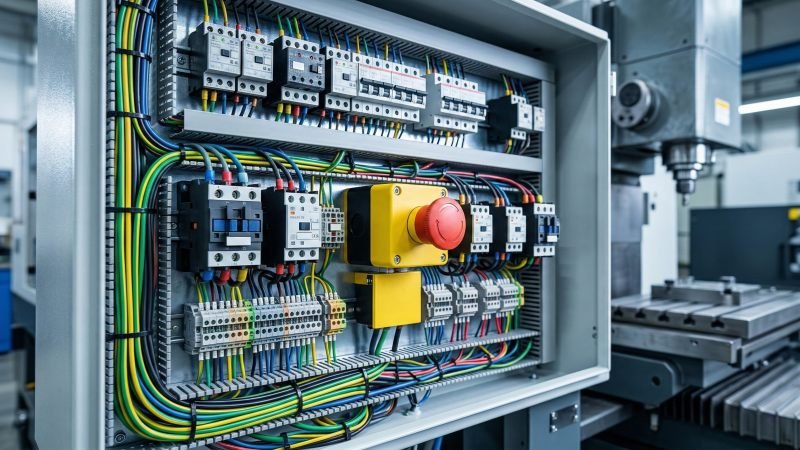
In the United States, equipment must meet strict Occupational Safety and Health Administration (OSHA) standards. Meanwhile, European buyers must strictly enforce CE machinery directives. These rules dictate mandatory physical safety features on the factory floor. For example, heavy moving parts on a vacuum forming machine must have solid protective guards. Similarly, the machine must feature prominent, easily accessible emergency stop (E-stop) buttons around the entire perimeter.
On top of that, the main electrical cabinets must be fully enclosed and properly grounded to prevent electrocution. Consider a hydraulic clicker press used for die-cutting universal car mats. It absolutely requires optical light curtains to instantly stop the press if a worker reaches inside. Your new automated machinery demands the exact same level of reliable physical safety interlocks.
| Target Region | Primary Safety Standard | Key Physical Requirements | Consequence of Non-Compliance |
|---|---|---|---|
| North America | OSHA / UL | Lockout/tagout points, enclosed and labeled electrical panels. | Heavy government fines, immediate facility shutdown. |
| Europe | CE Machinery Directive | Interlocked safety guards, standardized mechanical risk assessment. | Blocked at customs port, denied legal entry. |
| Australia | AS/NZS Standards | Specific wire color coding, localized emergency stop wiring. | Failed local engineering inspection, legally unusable. |
Managing Logistics and Procurement Contracts
How do you securely transport heavy industrial equipment across the ocean without losing money to hidden fees or supplier disputes?
You must strictly define your shipping responsibilities using international commercial terms and enforce a milestone-based payment contract. This structured approach prevents unexpected destination charges, ensures proper cargo loading, and safeguards your capital until the machinery is ready for export.
Choosing the Right Shipping Terms
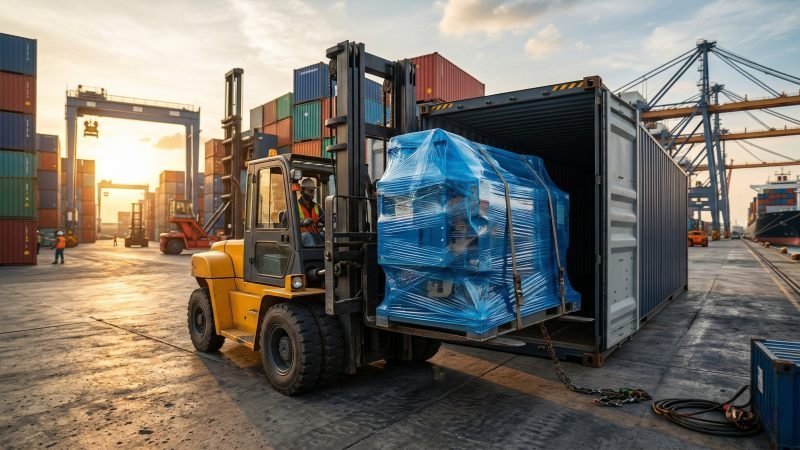
Shipping a massive TPE vacuum forming machine is highly complex. It usually requires a dedicated 20-foot or 40-foot shipping container. That’s why you need to lock down clear shipping terms, known as Incoterms. These terms dictate exactly who pays for what during transit.
Many buyers mistakenly choose CIF (Cost, Insurance, and Freight). With CIF, the supplier books the ocean freight. The catch? They’ll often default to budget freight forwarders. Before you know it, you’re hit with massive, hidden handling fees once the machine arrives at your local port.
That’s exactly why veteran importers swear by FOB (Free On Board). With FOB, the Chinese factory pays to load the machinery onto the ship in China. After that, you control the ocean freight. You hire your own trusted freight forwarder. This is exactly like hiring your own dedicated flatbed trucking company to move a massive 15-meter PVC backing line. By controlling the carrier, you control the final costs and prevent transit damage.
Container sizes and shipping weights can vary significantly based on specific machine dimensions and optional upgrades. Always verify the exact gross weight and packing details directly with your supplier before booking freight.
| Shipping Term | Who Books the Ocean Freight? | Risk of Hidden Destination Fees | Best For |
|---|---|---|---|
| FOB (Free On Board) | The Buyer | Very Low | Buyers who want full control over logistics costs. |
| CIF (Cost, Insurance, Freight) | The Supplier | Very High | Inexperienced buyers (not recommended for machinery). |
| EXW (Ex Works) | The Buyer | Low | Buyers with highly experienced logistics teams in China. |
Structuring Contracts to Protect Your Investment
A basic proforma invoice is not a legally binding contract. You must draft a formal, bilingual Purchase Agreement. This contract must clearly link your payments to specific production milestones.
Never pay the full balance upfront. A standard, secure payment structure is a 30% initial deposit. You pay the remaining 70% balance only after the machine physically passes the Factory Acceptance Test. This is identical to commissioning a custom embossing roller for car mat patterns. You never pay the final invoice until the machinist physically proves the roller stamps the design flawlessly.
To keep the factory honest, your contract needs strict late-delivery penalties. For example, you can stipulate a 1% cost deduction for every week the shipment is delayed. This penalty legally forces the factory to prioritize your order over others.
Finally, attach all detailed technical specifications directly to this contract. You must clearly list the required PLC brands, electrical voltage, and mandatory safety guards. If they try to sneak in a cheap generic motor, it’s a clear breach of contract. You instantly hold the leverage to refuse final payment until the machine meets your approved specs.
Conclusion
Procuring heavy industrial equipment internationally is a significant investment that requires careful planning, strict oversight, and clear communication. By systematically verifying manufacturer credentials, enforcing rigorous pre-shipment quality testing, securing reliable after-sales support, and establishing ironclad procurement contracts, you drastically reduce the risks associated with overseas manufacturing. A well-planned approach ensures that your new machinery will integrate seamlessly into your production line and perform reliably for years to come. If you are ready to expand your manufacturing capabilities with high-quality equipment, please contact us to discuss how we can support your business goals.