-
Whatsapp +86 13526654721
-
Email: sales@carmatrolls.com
-
Address: AUX Industrial Park, Shangjie District, Zhengzhou City, Henan Province, China
-
Whatsapp +86 13526654721
-
Email: sales@carmatrolls.com
-
Address: AUX Industrial Park, Shangjie District, Zhengzhou City, Henan Province, China

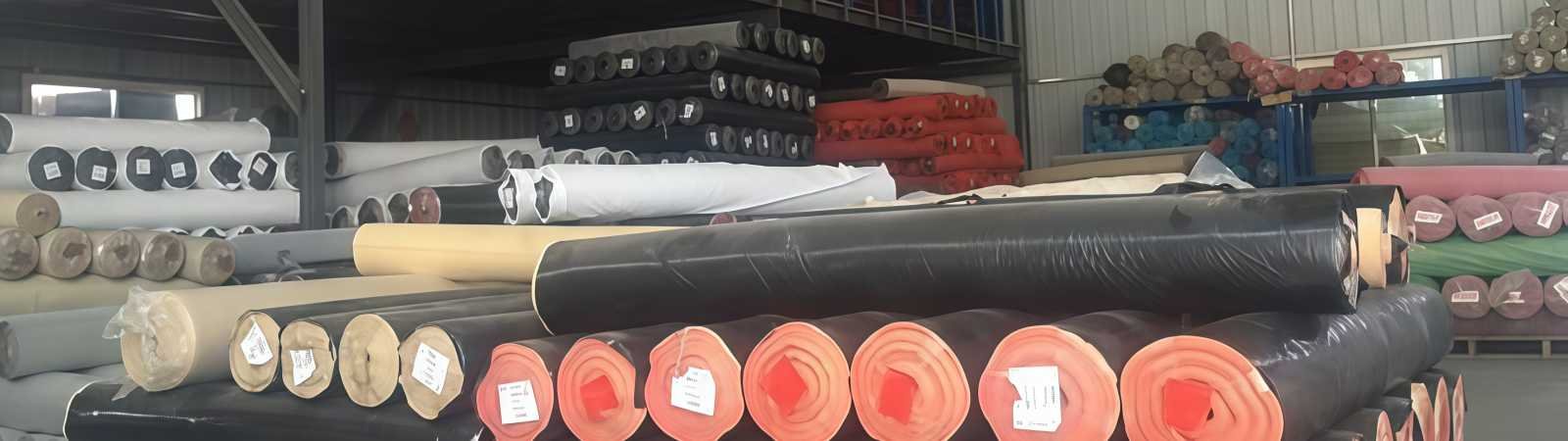
The Benefits of Multi-Layer Car Mat Materials (5D/7D Structure)
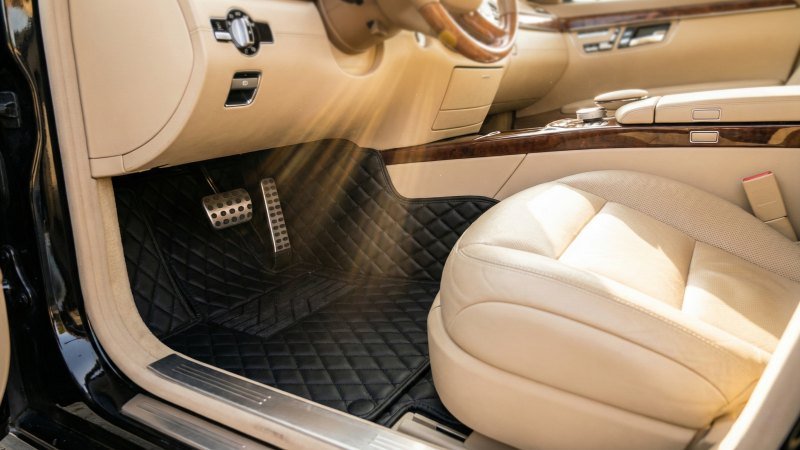
5D and 7D car mats provide superior vehicle protection through a composite structure that combines durable PU leather, high-density XPE foam, and anti-slip backing into a precision-molded unit. These multi-layer designs offer comprehensive waterproofing, significant noise reduction, and enhanced safety via a custom fit that prevents pedal obstruction, while 7D models feature an added detachable coil layer for versatile maintenance and extended durability.
Structural Advantages of Composite Layers
What specific structural features make multi-layer 5D and 7D car mats superior to standard single-layer options?
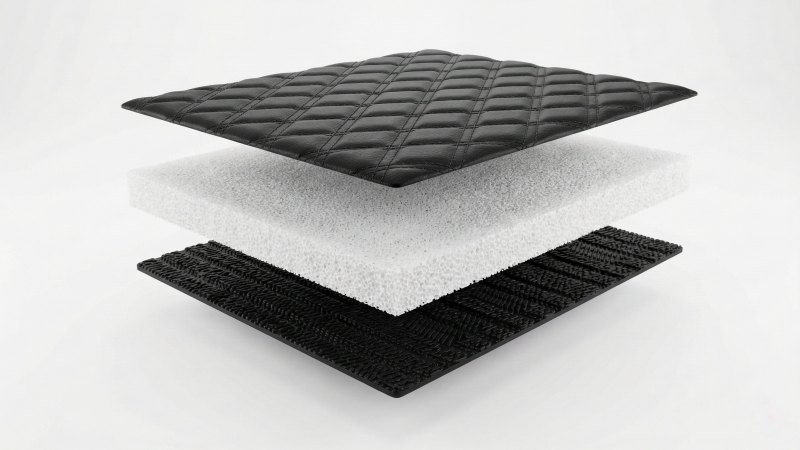
Multi-layer car mats utilize a hot-press manufacturing process to bond distinct materials, such as PU leather, high-density sponge, and XPE foam, into a single cohesive unit. This composite structure provides semi-rigid durability that maintains the mat’s shape over time, unlike flexible rubber mats that may warp, while 7D models add a detachable structural layer for enhanced surface protection.
Durability of High-Grade PU Leather Surfaces
The top layer of a 5D mat determines its resistance to daily abrasion. Manufacturers typically select high-grade Polyurethane (PU) leather for this surface. This material offers the visual appeal of genuine leather but provides significantly higher structural strength. Genuine leather can be fragile and prone to scratching from shoe heels. PU leather, on the other hand, is engineered to withstand constant friction without peeling.
Beyond abrasion resistance, consider UV stability. Intense sunlight through car windows can cause standard materials to fade or crack. The PU layer acts as a structural shield for the car mat materials underneath. Think of this layer like the rugged, soft-touch materials used on automotive door panels. It looks premium but is built specifically to handle rough contact that delicate upholstery cannot survive.
Resilience of the XPE High-Density Foam Core
The core strength of 5D and 7D mats comes from the middle layer, known as XPE (Chemically Cross-linked Polyethylene) foam. This is not a soft, squishy sponge. Instead, XPE is a semi-rigid foam that holds a molded shape. When a manufacturer scans a car floor and molds the mat, the XPE core ensures the mat matches those contours exactly.
Key structural benefits of XPE foam include:
- Shape Memory: If the mat is bent during installation, the XPE core helps it return to its original molded form.
- Compression Resistance: It withstands the weight of the driver’s feet without permanently flattening out.
- Layer Bonding: It serves as the anchor point that bonds the top leather and bottom anti-slip layers together.
Note: The thickness of the XPE layer typically ranges between 5mm and 7mm, but this specification can vary by manufacturer. Always verify the specific foam density and thickness with your supplier to ensure it meets your durability requirements.
Versatility of the 7D Detachable Coil Layer
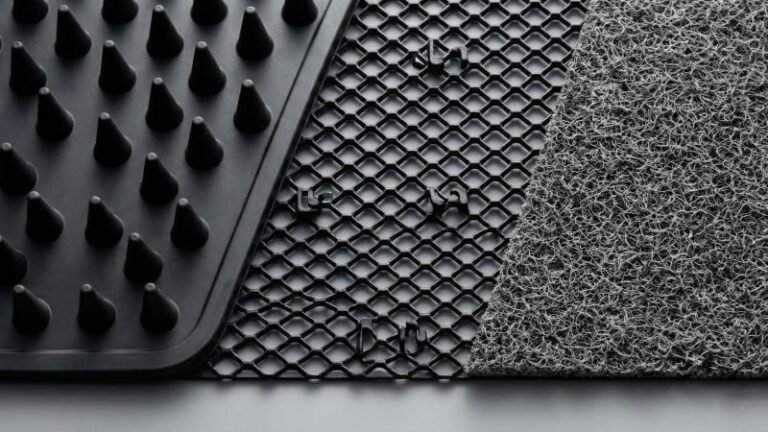
So, what separates a 7D from a 5D? It’s all about that secondary layer. A 7D mat includes a removable coil or loop-pile mat that sits on top of the PU leather base. This secondary layer attaches using secure locking clips or rotating buckles.
This adds a “sacrificial” structural element. The heavy-duty plastic coil takes the direct impact of shoes, mud, and water. By absorbing the physical wear, it preserves the condition of the leather layer beneath it. If the top coil layer wears out after years of use, it can often be replaced without changing the entire mat system.
Comparison of Structural Layers
| Feature | 5D Structure | 7D Structure |
|---|---|---|
| Primary Surface | Integrated PU Leather | Detachable Coil Mat (PVC/EVA) |
| Base Layer | XPE Foam + Anti-Slip Base | XPE Foam + Anti-Slip Base |
| Connection | Single bonded unit | Two units connected by clips |
| Wear Focus | Leather resists abrasion directly | Coil layer absorbs abrasion |
This dual-structure design offers versatility. Drivers can remove the top structural layer for a sleeker look or keep it attached for maximum heavy-duty protection.
Superior Interior Coverage and Protection
How do the design and material properties of 5D and 7D car mats provide better protection than standard automotive floor mats?
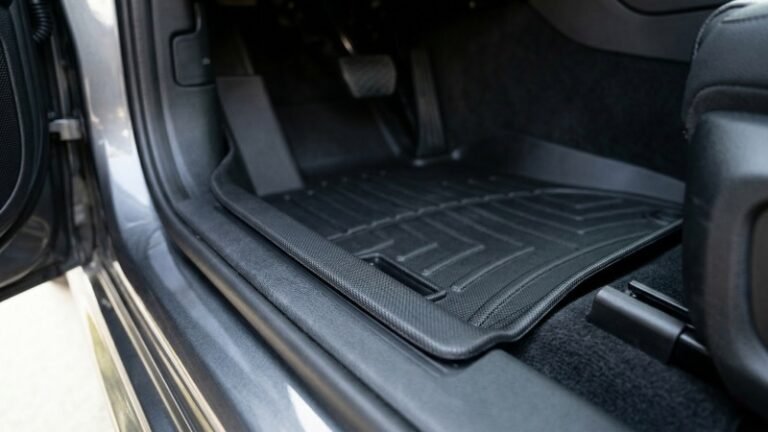
5D and 7D car mats utilize 3D laser scanning technology to create a custom-molded fit that extends vertically up the sidewalls of the vehicle’s footwell. This creates a waterproof, high-walled basin that completely isolates the original chassis carpet from liquid spills, mud, and debris, ensuring that contaminants are contained within the mat rather than seeping into the vehicle’s flooring.
Waterproofing Capabilities for All-Weather Defense
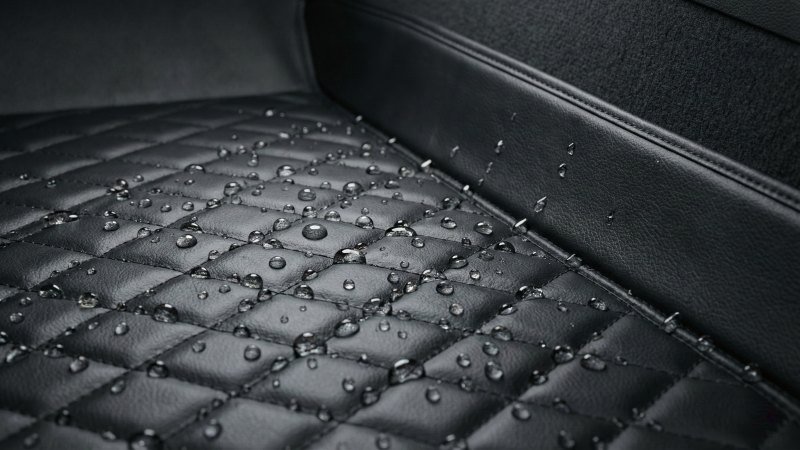
The primary protective benefit of multi-layer mats is their complete impermeability. Unlike traditional OEM carpet mats, which are woven and act like a sponge, 5D and 7D mats function like a sealed barrier. The top layer of PU leather and the underlying XPE foam are hydrophobic, meaning they repel water rather than absorb it.
Have you ever pulled up a standard mat to find damp, moldy carpet underneath? That is exactly what we are preventing here. When water soaks through a standard cloth mat, it can get trapped against the chassis. Over time, this trapped moisture can lead to mold growth and even rust on the floor pan.
Layer Functionality for Waterproofing:
- PU Leather Skin: Acts as the first line of defense, causing liquids to bead up on the surface.
- Closed-Cell XPE Foam: Even if the top layer is scratched, the “closed-cell” structure of the foam prevents water from passing through to the bottom.
Think of this like the weather stripping on a car door. Just as the rubber seal prevents rain from entering the cabin, the fused layers of a 5D mat seal the floor off from wet shoes and spilled drinks.
Extended Sidewall Protection Against Dirt and Scuffs
Flat mats have a major design flaw: they ignore the vertical surfaces. A significant amount of interior damage occurs on the vertical sides of the center console and the door sills. Passengers often scuff these carpeted areas with their shoes when entering or exiting the vehicle.
5D and 7D mats address this by incorporating “high-wall” or “full-surround” coverage. The material is molded to rise up the sides of the footwell, often covering 80% to 90% of the exposed carpet. This protects the velvet or carpeted lining of the car from becoming frayed or stained by shoe polish and mud.
Industry Insight: Many luxury car owners report that the “dead pedal” (the footrest for the left foot) is the first area to show wear. Generic mats rarely cover this area. A properly designed 5D mat includes specific coverage for the dead pedal, protecting it from heavy wear.
Please note: The exact height of the sidewall coverage depends on the specific vehicle model and the mold used by the supplier. Some manufacturers offer “standard coverage” versus “extended coverage.” Always confirm the sidewall height specifications before purchasing.
Containment Efficiency of the Tray-Like Design
This brings us to containment. Because the XPE core holds its shape, the edges of the mat do not flop down. This creates a “dish” or “tray” effect.
When a driver tracks in slush, snow, or mud, gravity pulls the mess to the bottom of the mat. The raised edges act like a retaining wall. This prevents liquids from sloshing over the side and staining the carpet underneath during sharp turns or sudden stops.
Comparison of Debris Containment
| Mat Type | Structure | Containment Result |
|---|---|---|
| Flat Universal Mat | No raised edges; flat rubber or cloth. | Liquid runs off the edges onto the carpet when the car moves. |
| Shallow Tray Mat | Slight lip (1-2 cm); flexible rubber. | Holds minor spills but can collapse under the weight of a foot. |
| 5D/7D Structural Mat | High, rigid walls (multi-layer XPE). | Traps liters of liquid and mud without spilling over, protecting the chassis. |
In the automotive accessory industry, this is the difference between a flat trunk liner and a molded cargo tray. The molded tray is designed to hold spills in place, ensuring the vehicle’s resale value remains high by keeping the permanent flooring pristine.
Enhancement of Driving Comfort and Acoustics
Beyond just keeping the floor clean, can these mats actually change how a car feels to drive and what you hear inside the cabin?
Multi-layer 5D and 7D car mats act as a secondary insulation system, utilizing high-density XPE foam and sponge layers to absorb road vibration and significantly dampen chassis noise. This composite structure provides a cushioned barrier that reduces driver foot fatigue by absorbing micro-vibrations and offers effective thermal insulation to regulate cabin temperature against engine and exhaust heat.
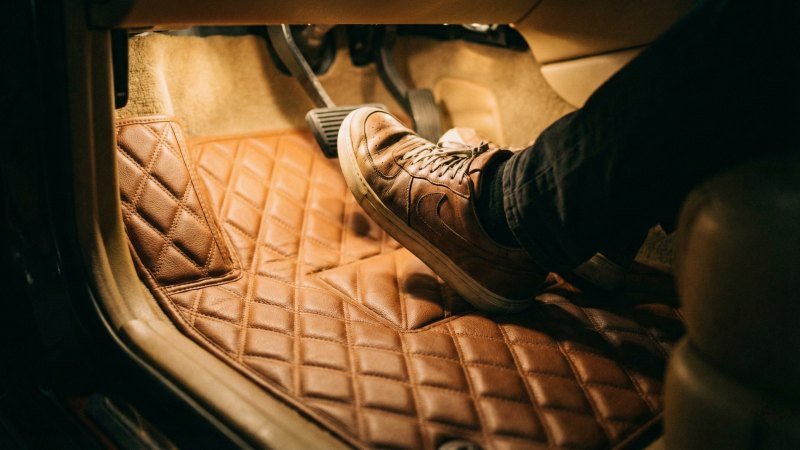
Noise Reduction Properties of Multi-Layer Designs
A significant amount of road noise enters the vehicle cabin through the floor pan. This includes the sound of tires rolling on pavement, gravel hitting the wheel wells, and general wind resistance. In the automotive industry, this is often referred to as NVH (Noise, Vibration, and Harshness).
Standard rubber mats differ from multi-layer mats in how they handle sound. A thin rubber mat allows sound waves to pass through easily. However, a 5D or 7D mat uses multiple layers of varying density. As sound waves travel through the dense leather, then the porous sponge, and finally the semi-rigid XPE foam, they lose energy.
This functions similarly to the sound-deadening sheets (often made of butyl rubber) that car audio installers apply to door panels to stop rattling. The mat adds mass and thickness to the floor, which stops the metal floor from resonating as loudly.
Acoustic Performance Comparison
| Material Type | Sound Interaction | Effect on Cabin Noise |
|---|---|---|
| Standard Rubber | Transmits vibration | Minimal reduction; road noise remains audible. |
| Thin Carpet | Absorbs high frequencies | Reduces some echo but not deep road rumble. |
| Multi-Layer (5D/7D) | Damps vibration & absorbs | Noticeable reduction in low-frequency road hum. |
Ergonomic Benefits of Cushioned Foot Support
Driving requires the heel of the right foot to act as a pivot point for operating the throttle and brake. On a hard surface, this constant pressure and the vibration from the engine can lead to heel fatigue during long road trips.
Multi-layer mats typically incorporate a layer of high-elasticity sponge just below the leather surface. This layer acts like a shock absorber for the foot. It does not compromise the firmness needed to push the pedal, but it is soft enough to absorb the micro-vibrations that travel up from the chassis.
It’s the same logic as a premium leather-wrapped steering wheel versus a hard plastic one. Both steer the car, but the padded version reduces hand fatigue by absorbing vibration. The mat performs the same function for the driver’s feet.
Thermal Insulation from Chassis Heat
The floor of a vehicle is often subjected to intense heat sources. The vehicle’s exhaust system, including the catalytic converter and muffler piping, runs directly underneath the metal floor pan. In summer, the hot asphalt also radiates heat upward.
A standard single-layer mat offers little resistance to this thermal transfer. However, the XPE (cross-linked polyethylene) core used in 5D and 7D mats is an effective thermal insulator. It has low thermal conductivity, meaning it resists the flow of heat.
Essentially, you’re creating a thermal break. This helps maintain the interior climate control settings more efficiently. It keeps the cool air from the air conditioner inside the footwell while blocking the radiating heat from the exhaust pipes underneath.
Safety Features and Stability
Do multi-layer car mats stay in place better than standard mats to ensure driving safety?
Yes, 5D and 7D car mats feature a specialized anti-slip bottom layer, often referred to as a “burr” or “gecko” backing, which mechanically interlocks with the vehicle’s floor carpet. Combined with 3D laser-measured dimensions, this design eliminates mat shifting, preventing dangerous interference with the brake and accelerator pedals.
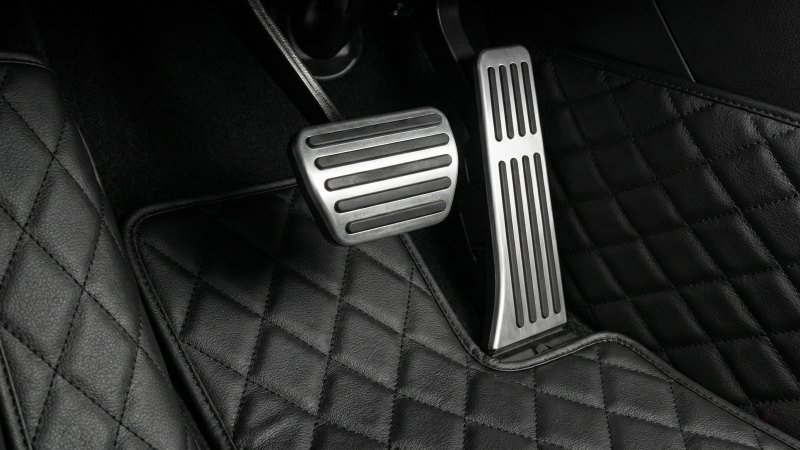
Importance of Anti-Slip Bottom Coatings
The bottom layer of a car mat is arguably its most critical safety feature. Standard rubber mats often rely on heavy weight or large rubber spikes to stay in place. However, these can still slide forward during hard braking. But the real game-changer in 5D and 7D mats is the specialized “burr” or “anti-skid” bottom material.
This material functions similarly to the hook side of a hook-and-loop fastener system. It grabs the loop fibers of the car’s original carpeting. This creates a mechanical interlock rather than just relying on friction. Once placed, the mat resists “shear force,” which is the force applied when your feet push against the floor while driving.
Industry Context: Loose floor mats are a documented safety hazard. Following major automotive recalls in the late 2000s regarding pedal entrapment, aftermarket manufacturers shifted focus toward these high-grip bottom layers to ensure the mat effectively becomes a fixed part of the floor.
Precision Fitment to Prevent Pedal Obstruction
But rigidity isn’t just about looks; it’s a safety requirement. A common danger with universal cloth mats is that they can bunch up or fold over. If a mat folds behind the brake pedal, it can prevent the driver from stopping the car.
Multi-layer mats are manufactured using 3D laser scanning data. This process maps the footwell with sub-millimeter accuracy. The manufacturer creates a mold that specifically accounts for the travel arc of the accelerator and brake pedals.
Because the mat is semi-rigid (due to the XPE layer discussed earlier), it cannot fold or bunch up like a towel. It remains flat and clears the pedals at all times. This is similar to installing a custom-molded gasket in an engine component; it fits into the groove perfectly and does not interfere with moving parts, unlike a generic “cut-to-fit” gasket that might block a flow channel.
Safety Comparison: Universal vs. Custom Structure
| Feature | Universal Flat Mat | 5D/7D Structural Mat |
|---|---|---|
| Pedal Zone | Often slides under pedals | Laser-cut clearance for full pedal travel |
| Shape Stability | Can fold or bunch up | Semi-rigid; holds shape permanently |
| Anchoring | Relies on gravity/weight | Uses mechanical clips and anti-slip backing |
| Risk Level | High (Potential entrapment) | Low (Fixed position) |
On top of that, most 5D/7D mats include mounting clips that connect to the vehicle’s original factory retention posts (if available). This provides a secondary physical anchor, ensuring the mat physically cannot move forward.
Long-Term Maintenance and Value
Do the advanced materials used in 5D and 7D car mats actually save time on cleaning and offer better durability than cheaper alternatives?
The non-porous PU leather surface of 5D/7D mats allows for immediate wipe-down cleaning without requiring removal or drying time, unlike absorbent carpet mats. Furthermore, the reinforced multi-layer construction resists heel abrasion and structural deformation, typically offering a service life of 3 to 5 years, which provides superior long-term value despite a higher initial cost.
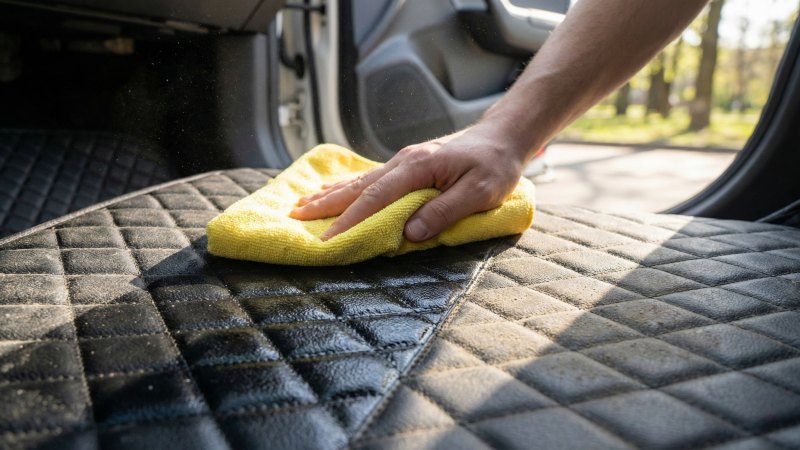
Ease of Cleaning Compared to Traditional Mats
The most immediate benefit for vehicle owners is the drastic reduction in maintenance effort. Traditional carpet mats function like a filter; they trap dust, sand, and allergens deep within their woven fibers. Cleaning them requires removal, heavy vacuuming, shampooing, and often hours of drying time to prevent mildew.
Now, look at the 5D workflow. 5D mats behave like the vehicle’s exterior body panels. Dirt and liquid remain on the surface rather than penetrating the material. To clean them, you simply wipe the surface with a damp cloth or a mild interior cleaner. You do not need to remove the mats from the car for routine cleaning.
For 7D mats, the process is slightly different but equally efficient. The top coil layer captures the heavy debris. You detach this layer, shake it out, and rinse it with a hose. The underlying leather layer remains clean and dry.
Cleaning Workflow Comparison
| Cleaning Step | Traditional Carpet Mat | 5D/7D Structural Mat |
|---|---|---|
| Spill Response | Liquid soaks in immediately. | Liquid beads up; wipe to remove. |
| Routine Care | Heavy vacuuming required. | Quick wipe with a damp cloth. |
| Deep Clean | Shampoo and extract (scrubbing). | Rinse coil layer (7D only). |
| Drying Time | 4-12 hours (risk of mold). | Immediate (wipe dry). |
This difference is similar to maintaining leather seats versus cloth seats. Leather requires a simple surface wipe to look new, whereas cloth seats absorb stains that require deep extraction to remove.
Lifespan and Wear Resistance Analysis
The value of a car mat is defined by how long it resists “heel fatigue.” This occurs where the driver’s right heel pivots between the brake and gas pedals. On standard felt or carpet mats, this friction creates a hole effectively destroying the mat within 1 to 2 years. Why buy a mat that wears a hole in the heel spot after just 12 months?
5D and 7D mats mitigate this through material density. The PU leather surface is abrasion-resistant by design. Additionally, most manufacturers reinforce the driver’s side mat with a thermoplastic or metal heel pad. This acts as a dedicated wear plate, similar to the skid plates installed on off-road vehicles to protect vital components from impact.
Estimated Service Life
- Universal Carpet Mats: 1 – 2 Years (Prone to holes and curling).
- 5D/7D Custom Mats: 3 – 5+ Years (Resists holes and maintains shape).
When you crunch the numbers, lasting twice as long as standard mats means multi-layer mats often present a lower “cost per year” ownership expense.
Please note: The lifespan of the mat is heavily influenced by the grade of PU leather and the thickness of the heel pad used by the factory. Always confirm the abrasion resistance rating (often measured in cycles) with your supplier to ensure it meets your quality standards.
Finally, there’s the shape factor. The XPE foam core ensures the mat keeps its shape. Cheap rubber mats often curl at the edges after a hot summer, looking unsightly. The composite structure of a 5D mat remains rigid, preserving the interior’s resale value over the long term.
Conclusion
The shift from standard floor mats to multi-layer 5D and 7D structures represents more than just an aesthetic upgrade; it is a functional investment in the vehicle’s longevity and the driver’s comfort. By utilizing advanced car mat manufacturing machines and composite materials like XPE foam and high-grade PU leather, these mats solve the most common pain points of car ownership: dampness, noise, safety risks, and difficult cleaning.
Whether choosing the sleek, integrated look of a 5D mat or the versatile, dual-layer protection of a 7D system, the result is a safer, quieter, and cleaner driving environment. For businesses and consumers alike, understanding these structural advantages ensures that the choice of car mat delivers real, long-term value.