-
Whatsapp +86 13526654721
-
Email: sales@carmatrolls.com
-
Address: AUX Industrial Park, Shangjie District, Zhengzhou City, Henan Province, China
-
Whatsapp +86 13526654721
-
Email: sales@carmatrolls.com
-
Address: AUX Industrial Park, Shangjie District, Zhengzhou City, Henan Province, China

Car Mat Manufacturing Profit Margin Analysis: Is It a Good Investment?
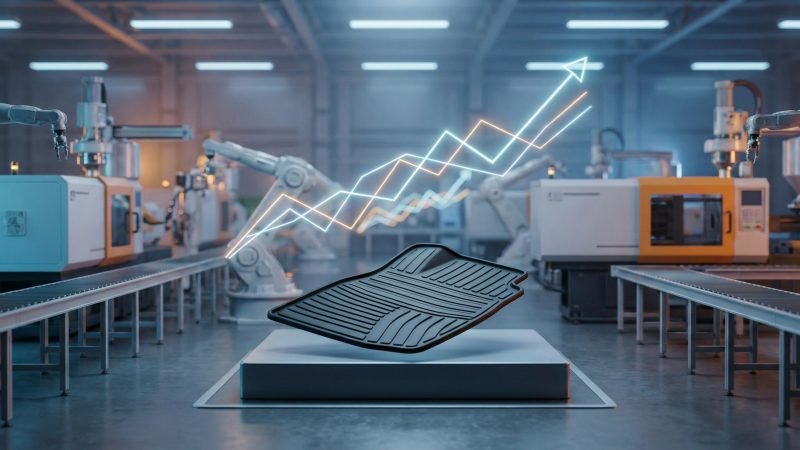
Is investing in car mat manufacturing a profitable venture in the current economic climate?
Yes, car mat manufacturing remains a highly profitable investment, particularly within the custom-fit and TPE material segments. While traditional universal mats see margins compressed to 15-25% due to saturation, modern 3D scanning and eco-friendly material technologies allow manufacturers to achieve gross margins exceeding 40%. Success relies heavily on selecting the correct production model—either low-asset cutting workshops or high-volume injection molding—to match capital capabilities with market demand.
Profit Margin Breakdown by Material Tier
How do profit margins significantly differ across various car mat material types and manufacturing processes?
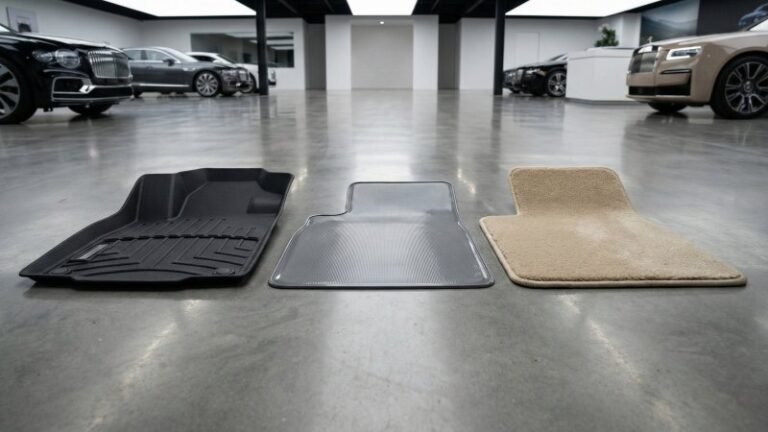
Profit margins in car mat manufacturing are directly tied to material sophistication and fit precision. While standard universal PVC and needle-punch carpet mats typically yield lower gross margins between 15% and 25%, advanced materials like TPE and hot-pressed composites command significantly higher returns. Specifically, manufacturing custom-fit TPE mats using 3D scanning data often pushes gross profit margins to 40% or even 60%, driven by the premium pricing consumers are willing to pay for durability and perfect vehicle integration.
Gross Margins for Standard PVC and Carpet Mats
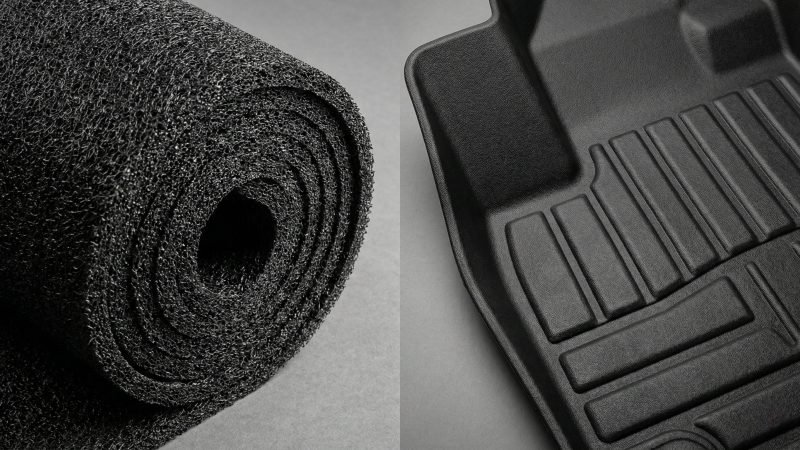
Entering the market with standard universal mats is the most basic level of production. This category includes generic PVC (polyvinyl chloride) rubber mats and simple needle-punch carpet mats that fit “most” vehicles but none perfectly. Because these products are commodities, the competition is fierce. That forces you to rely heavily on volume rather than high markup per unit.
Think of this segment as selling raw material by weight with minimal value-added processing. For instance, a standard set of universal PVC mats might cost $8 to produce and sell to a wholesaler for $10. This leaves a very tight margin. The manufacturing process here is similar to stamping out standard metal washers; there is little differentiation between one factory’s product and another’s. So, buyers often make decisions based solely on price.
Manufacturers in this tier often face “margin compression.” This happens when raw material costs rise, but you cannot raise the selling price because competitors will undercut you. Unless you have massive production capacity to lower overhead costs, this sector offers the lowest return on investment per unit.
High-Yield Returns from TPE and Hot Pressing Technology
Shifting production to Thermoplastic Elastomer (TPE) and using hot pressing technology changes the financial equation. TPE combines the durability of rubber with the processing advantages of plastic. Unlike the heavy smell often associated with cheap PVC, TPE is odorless and eco-friendly. This material difference allows manufacturers to charge a higher price point that outpaces the increase in material cost.
The hot pressing process allows for deep textures and intricate designs that flat carpet or simple rubber cannot achieve. Think of this upgrade like moving from machining a rough casting to producing a precision-molded component. The perceived quality is instantly higher. A set of TPE mats might cost $15 to manufacture due to higher material costs, but the market value is often $40 to $50 at the wholesale level.
Better yet, TPE minimizes waste during production compared to vulcanized rubber. The material is recyclable within the factory. You can regrind scraps and feed them back into the production line. This efficiency directly boosts the net profit margin by reducing material loss.
The Premium Pricing Power of Custom-Fit Designs
The highest profit margins in the industry come from Custom-Fit or “3D” mats. This is where the product stops being a simple accessory and becomes a vehicle protection system. By using 3D scanning data to create molds that fit a specific car model (like a Tesla Model Y or Ford F-150) perfectly, manufacturers create a high-barrier product.
Consumers view custom-fit mats as an investment in their vehicle’s resale value. Here is why that matters: price sensitivity drops. A customer who just bought a $50,000 car is rarely willing to save $20 on ill-fitting mats. They will pay a premium for the guarantee that the liner will cover every inch of the floorboard.
This tier decouples the selling price from the raw material cost. You use roughly the same amount of TPE material as a high-end universal mat, but the retail price can double. The value is in the engineering and the mold, not just the plastic.
Note: These figures are industry averages; accurate cost modeling requires verifying current raw material pricing with your granule supplier, as petrochemical derivatives are subject to market fluctuation.
| Product Tier | Manufacturing Complexity | Price Sensitivity | Est. Gross Margin |
|---|---|---|---|
| Universal Carpet/PVC | Low | High (Price Driven) | 15% – 25% |
| Universal TPE | Medium | Medium | 25% – 35% |
| Custom-Fit 3D TPE | High | Low (Quality Driven) | 40% – 60%+ |
Comparing Investment Models: Light vs. Heavy Asset
Which manufacturing model offers the optimal balance between initial capital risk and long-term profit potential?
For new entrants, the “Light Asset” model utilizing digital cutting technology provides the safest route to profitability, allowing for a break-even point often achieved within the first year due to low overhead. In contrast, the “Heavy Asset” injection molding model requires significant upfront capital for machinery and dedicated tooling, yet it yields superior profit margins per unit once production volume exceeds 10,000 sets annually, making it the preferred choice for scaling businesses.
The Cut-and-Sew Model for Low Capital Entry
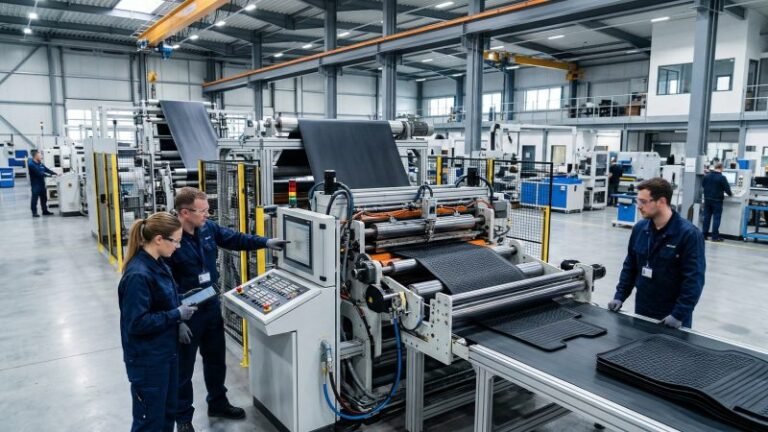
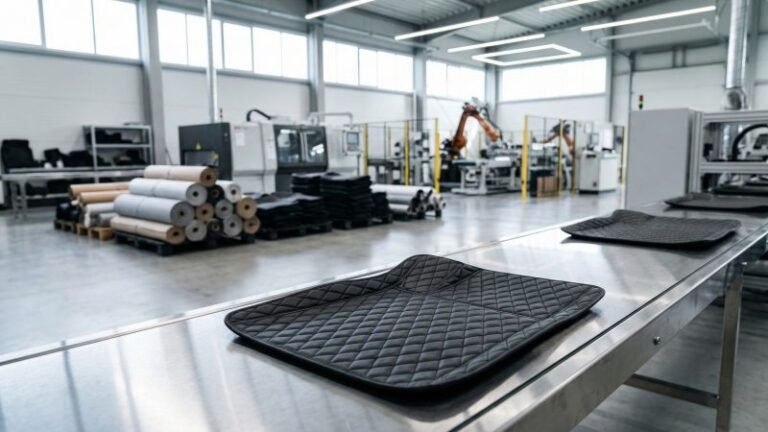
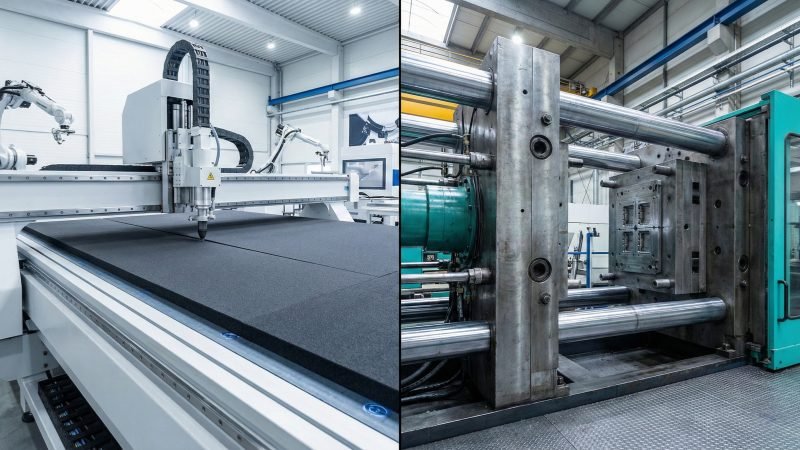
The “Cut-and-Sew” approach acts as a flexible entry point into the automotive aftermarket. In this model, you do not manufacture the raw material itself. Instead, you purchase semi-finished rolls of material—such as PVC coil, faux leather, or TPE sheets—and process them into finished mats. The primary equipment required is a digital flatbed cutter and industrial sewing machines for edging.
Picture a “Job Shop” in custom machining. You are not tied to a single product line. Because you use digital files (CAD data) to tell the machine where to cut, you can switch from producing mats for a Toyota Camry to a BMW X5 in seconds without changing any physical tools. This flexibility is crucial for capturing the “Long Tail” market—customers who own older or less common vehicles.
The financial barrier is low. A reliable digital flatbed cutter typically costs between $15,000 and $30,000. Since you are not creating molds, your only “tooling” cost is purchasing the digital pattern files. This allows you to offer thousands of SKU options immediately without sinking cash into steel molds. The trade-off? Higher variable costs. You are paying a premium for the semi-finished material rolls compared to raw granules.
The Injection Molding Model for Scale and Volume
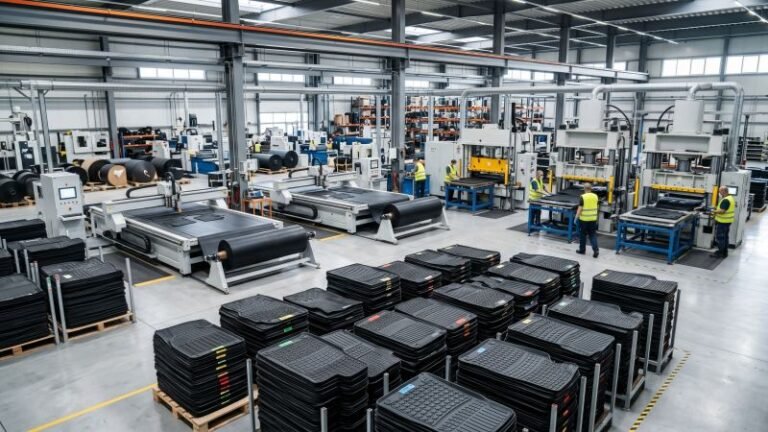
The injection molding model represents a heavy industrial commitment designed for mass production. Here, you manufacture the mat from scratch using raw plastic granules (pellets). The pellets are melted and injected into a massive steel mold under high pressure to form the mat.
Think of this process like a high-speed stamping press in an auto body shop. Once the machine is running, it produces identical parts rapidly with very little human intervention. The unit cost is extremely low because raw pellets are significantly cheaper than pre-made rolls. If you are producing 50,000 sets for a single popular vehicle model, like the Tesla Model 3, this model maximizes profit.
But there is a catch: rigidity. You need a specific steel mold for every single car model. A single set of high-quality molds (Driver, Passenger, Rear) can cost between $3,000 and $8,000 depending on complexity. If the car manufacturer updates the floor shape (a “facelift”), your expensive mold becomes scrap metal. Therefore, this model is risky for low-volume cars but highly profitable for best-sellers.
Estimated Startup Costs and Break-Even Timelines
Understanding the financial runway is critical for your investment decision. Let’s look at the numbers to see the stark contrast between setting up a flexible workshop versus a full-scale factory.
Light Asset Strategy (Workshop)
- Initial CAPEX: $40,000 – $70,000. This covers a flatbed cutter, sewing stations, initial roll inventory, and a small warehouse lease.
- Break-Even Point: Fast. With healthy sales margins, many businesses recover their initial investment in 6 to 12 months.
- Cash Flow: Positive cash flow is easier to maintain because you only cut material when you have an order (Make-to-Order), reducing “dead stock.”
Heavy Asset Strategy (Factory)
- Initial CAPEX: $300,000 – $1,000,000+. This includes heavy injection molding machines (200-500 tons clamping force), cooling systems, an initial library of molds for top 20 car models, and a large industrial facility.
- Break-Even Point: Slow. Due to the high depreciation of machinery and molds, ROI typically takes 24 to 36 months.
- Cash Flow: Requires significant working capital to hold raw material silos and finished inventory waiting for bulk buyers.
| Cost Component | Cut-and-Sew (Light Asset) | Injection Molding (Heavy Asset) |
|---|---|---|
| Machinery Cost | Low ($20k – $40k) | High ($150k – $500k+) |
| Tooling (Molds) | $0 (Digital Files) | High ($3k – $8k per car model) |
| Material Cost | High (Semi-finished Rolls) | Low (Raw Granules) |
| Flexibility | Instant (Change digital file) | Low (Change heavy steel mold) |
| Ideal Volume | 1 – 500 sets per car model | 5,000+ sets per car model |
Critical Cost Factors Affecting Net Income
Beyond the initial investment, what are the silent operational expenses that drain potential profits in car mat manufacturing?
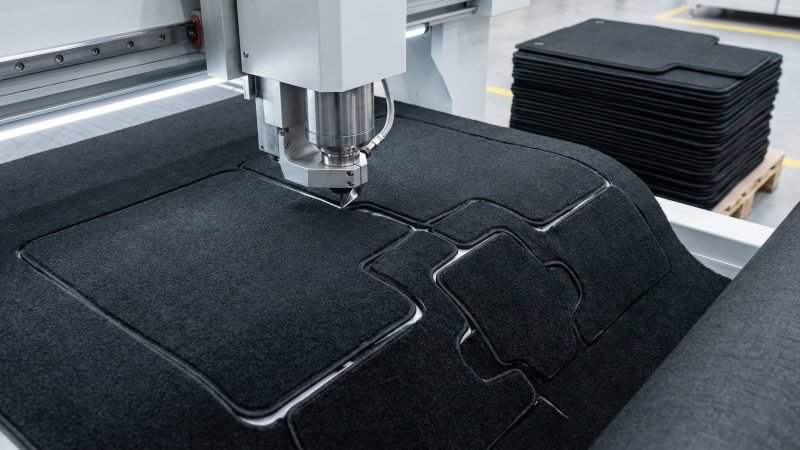
Net income is heavily influenced by three ongoing operational variables: material yield rates, energy consumption, and labor efficiency. Inefficient material nesting can result in waste levels as high as 25%, directly slashing margins, while the electricity costs of running heavy hydraulic machinery can exceed labor expenses in certain regions. Therefore, controlling “scrap rates” and maximizing “machine uptime” are the primary levers for maintaining a healthy bottom line.
Material Waste Rates and Optimization Strategies
Let’s be real: waste is simply money that you throw in the trash. The biggest threat to your net income is a low “Material Yield Rate.” This refers to how much of the raw material actually ends up in the final product versus how much is trimmed off.
For the Cut-and-Sew model, waste occurs during the cutting process. If you arrange the mat patterns poorly on the material roll, you leave large gaps of unused material. This is similar to punching circles out of a square metal sheet; the leftover skeleton is scrap. Using advanced Automatic Nesting Software is essential here. This software rotates and interlocks the patterns digitally to ensure maximum usage. Effective nesting can increase material utilization from 75% to over 90%.
For the Injection Molding model, waste comes in the form of “sprues” and “runners”—the channels where plastic flows before entering the mold cavity. Unlike cut waste, thermoplastic waste (like TPE) is often recyclable. You can use a granulator to chop these scraps back into pellets and feed them back into the machine. However, manufacturers must monitor the “regrind ratio” (the percentage of recycled scrap mixed with virgin material), as exceeding 20-30% can degrade the structural integrity of the final mat.
Equipment Depreciation and Energy Consumption
Your machinery costs you money even when it is turned off. This is called depreciation. In accounting terms, a $500,000 injection molding machine loses value every year. You must factor this “loss” into the cost of every single car mat you produce. If your production volume is low, the depreciation cost per unit becomes dangerously high.
Energy consumption is the second major factor, specifically for heavy machinery. Traditional hydraulic injection molding machines are power-hungry. They consume electricity constantly to keep the hydraulic fluid pressurized. Modern “Servo-Motor” machines are far more efficient because they only draw power during active movement.
Why does cycle time matter? A shorter cycle time means you produce more mats for the same electricity cost. If a machine takes 60 seconds to mold a mat instead of 40 seconds, your energy cost per unit increases by 50%. Always review the machine’s kilowatt-hour (kWh) rating relative to its clamping force, as local industrial electricity rates will significantly impact this variable cost.
Labor Costs in Automated vs. Manual Production Lines
Labor costs vary wildly depending on your chosen manufacturing method. The difference lies in the ratio of “Man-to-Machine.”
In a manual or semi-auto workflow (like Cut-and-Sew), labor is the biggest bottleneck. Industrial sewing requires skill. You cannot just hire anyone off the street; they need training to stitch complex 3D edges. One operator can typically only run one sewing machine at a time. If you receive a large order, you must hire more skilled workers, which linearly increases your costs.
In an automated injection workflow, labor is scalable. A single operator can tend to two or even three injection molding machines simultaneously. Their job is simply to remove the finished part and trim flash. The machine does the hard work. This drastically lowers the “Labor Cost Per Unit.” However, you need higher-paid technicians to maintain these complex machines, so the trade-off is between quantity of workers (manual) vs. quality of technical skill (automated).
| Cost Driver | Cut-and-Sew (Manual focus) | Injection Molding (Auto focus) |
|---|---|---|
| Material Waste | High risk (Permanent scrap) | Low risk (Recyclable scrap) |
| Energy Load | Low (Small motors) | High (Heating & Pressure) |
| Labor Skill | High (Sewing craftsmanship) | Moderate (Machine tending) |
| Scalability | Linear (More mats = More staff) | Exponential (Same staff, faster machines) |
Market Trends Driving ROI in the Coming Years
What specific consumer behaviors and industry shifts are currently creating the biggest profit opportunities for car mat manufacturers?
Current market analysis indicates a definitive pivot toward sustainable, high-performance materials, driven by stricter environmental regulations and changing consumer preferences. The return on investment (ROI) for manufacturers is increasingly dependent on aligning production with the demand for non-toxic TPE compounds, all-weather 3D protection, and specific configurations for electric vehicles (EVs). Manufacturers targeting these high-growth sectors generally project a compound annual growth rate (CAGR) significantly higher than those remaining in traditional flat carpet segments.
Consumer Shift Toward Eco-Friendly and Odorless Materials
The days of strong-smelling rubber mats are rapidly ending. Modern consumers, particularly families, are highly sensitive to Volatile Organic Compounds (VOCs). These are the invisible chemicals that create that “cheap rubber” smell in a hot car. In the past, manufacturers used heavy plasticizers to make PVC mats flexible, but these chemicals often released strong odors.
Now, the market has flipped to demand “Health-Safe” interiors. This trend mirrors the shift in automotive painting, where the industry moved from high-solvent paints to waterborne systems to reduce fumes. Manufacturers who switch to Thermoplastic Elastomer (TPE) gain a massive competitive advantage. TPE is inherently odorless and non-toxic.
How does this hit your wallet? It reduces “return rates.” A significant percentage of online returns for car mats are due to “bad smell.” By using odorless materials, you protect your profit margins from the logistical costs of returns and refunds. Note: Compliance with chemical safety standards (such as REACH in Europe or Prop 65 in the US) is essential for market entry, so material certification should be verified early.
The Growing Demand for Weather-Proof 3D Floor Liners
There is a clear transition from “aesthetic” mats to “functional” liners. Traditional flat mats sit on top of the carpet, but they allow dirt and water to slide off the edges. Compare that to where the market is actually going: aggressive 3D “tray-style” liners.
Think of a 3D liner like a sealed gasket in an engine block. A flat gasket might leak, but a molded O-ring sits in a groove and contains the fluid perfectly. Similarly, 3D liners have raised edges (sidewalls) that trap mud, snow, and spilled coffee. They prevent the mess from ever touching the car’s original carpet.
For you, this means higher profits because customers view 3D liners as “insurance” for their vehicle’s resale value. Car dealerships often bundle these high-margin liners into new car sales. For a manufacturer, producing a product that dealerships want to sell significantly increases order volume. The demand is year-round, but it spikes heavily before winter seasons, creating predictable cash flow cycles.
Opportunities in the Expanding EV Accessory Aftermarket
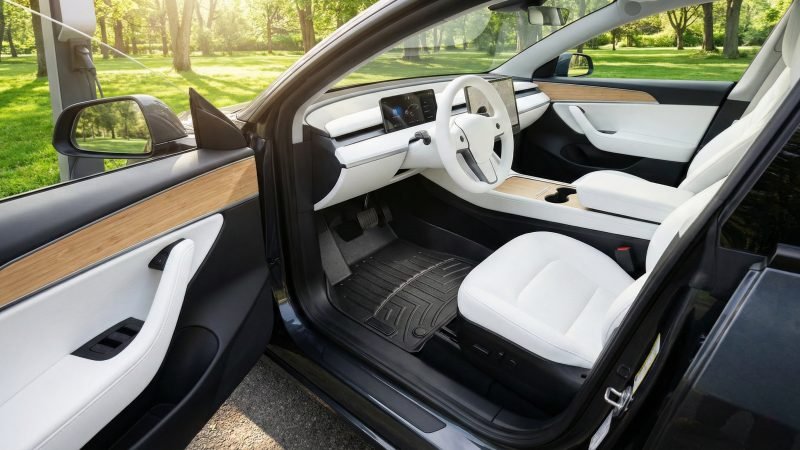
The rise of Electric Vehicles (EVs) creates a unique “reset button” for the manufacturing industry. EVs, like the Tesla Model Y or Ford Mustang Mach-E, have completely different floor architectures than gas cars. They lack the large transmission tunnel that usually runs down the center of the car.
This structural difference means old universal mats simply do not fit EVs. This gap in the market creates a massive opportunity for new manufacturers. You do not have to compete with established giants who have been making Ford F-150 mats for 20 years. Everyone starts at the same starting line with new EV models.
And here is the demographic shift working in your favor: EV owners tend to be tech-savvy and environmentally conscious. They are willing to spend more on accessories that match the high-tech, eco-friendly vibe of their car. Consequently, accessories for EVs often command a higher retail price, boosting the profit margin per unit for the manufacturer.
| Market Segment | Consumer Priority | Manufacturer Opportunity |
|---|---|---|
| Traditional Sedans | Low Price | High Volume / Low Margin |
| Luxury SUVs | Protection (3D Liners) | High Margin / Seasonal Sales |
| Electric Vehicles | Eco-Friendly & Tech | High Margin / Growing Market Share |
Strategic Sourcing to Maximize Profitability
How does your choice of raw material form—importing finished rolls versus raw chemical granules—dictate your final profit margin and logistical risks?
Strategic sourcing determines the balance between operational flexibility and unit cost efficiency. Importing semi-finished rolls reduces technical barriers and capital output, making it the superior strategy for diverse product lines, whereas sourcing raw granules offers the lowest possible material cost but demands high-volume storage and processing infrastructure. Ultimately, maximizing profitability requires aligning your sourcing strategy with your production scale to minimize Landed Cost, not just the factory gate price.
Advantages of Importing Semi-Finished Rolls vs Raw Granules
You face a fundamental choice right out of the gate: “Rolls” or “Granules.” This is similar to a machine shop deciding whether to buy a standard metal bar stock or to cast their own metal from scratch.
Semi-Finished Rolls (For Cut-and-Sew)
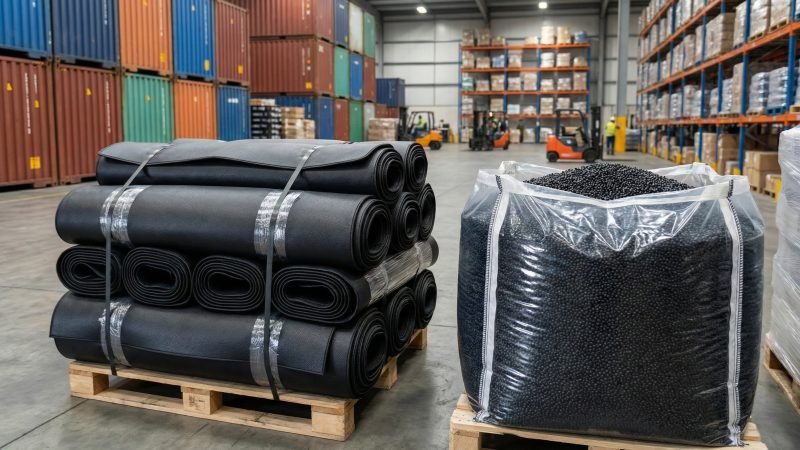
Importing rolls of TPE or PVC leather is a “Plug-and-Play” strategy. You pay a higher price per square meter because the supplier has already done the hard work of extrusion (melting and flattening the plastic). However, your risk is low. You can inspect the material quality immediately upon arrival. If the texture is wrong, you reject the roll. This method allows you to hold less inventory. You can order 500 meters of black TPE and 200 meters of beige TPE, allowing you to react quickly to customer color preferences without running a massive factory.
Raw Granules (For Injection Molding)
Buying granules (pellets) is a volume game. Granules are significantly cheaper than rolls because you are not paying for the supplier’s processing labor or energy. You are buying the chemistry directly. However, you face “Process Risk.” If your injection machine settings are wrong, you might waste tons of granules producing defective parts before you notice the error. Furthermore, granules require strict climate control. Similar to how welding electrodes must be stored in ovens to prevent porosity, hygroscopic plastic granules must be kept in silos with dehumidifiers. If they absorb moisture, the final car mats will develop bubbles and structural weaknesses.
Balancing Supply Chain Stability with Material Cost
In international trade, the “Unit Price” is deceptive. You must calculate the “Landed Cost,” which includes shipping, tariffs, and insurance. The physical density of your material plays a massive role here.
Shipping Efficiency
Granules are highly dense. You can pack approximately 20 to 25 tons of granules into a standard 20-foot shipping container. This gives you a very low shipping cost per kilogram.
Flip the script for semi-finished rolls. A roll of TPE material contains a lot of “air” because of its shape and packaging. You might only fit 10 to 12 tons of material in the same container. Consequently, your shipping cost per unit effectively doubles. If ocean freight rates spike (as they often do during peak seasons), the profit margin on rolls shrinks much faster than the margin on granules.
Lead Time Volatility
Sourcing rolls creates a longer supply chain dependency. If your supplier’s extruder breaks down, you have no material. With granules, the market is more commoditized. If one chemical supplier cannot deliver polypropylene pellets, you can often find a local substitute with the same technical specifications (Shore A hardness, density) to keep your machines running.
Vertical Integration vs Outsourcing Key Production Steps
As your factory grows, you will face the “Make or Buy” decision. Vertical integration means bringing outsourced steps in-house to capture the supplier’s profit margin.
The Extrusion Step
For a Cut-and-Sew manufacturer, the ultimate integration is buying your own extruder. Instead of buying rolls, you buy granules and make the rolls yourself. This allows you to recycle your own cutting waste immediately. Instead of selling scrap for pennies, you melt it down and turn it back into a fresh roll of material. This loop can reduce your material costs by 20% to 30%. But be warned: operating an extrusion line requires different engineering skills than cutting and sewing.
Mold Making
For Injection Molding, the bottleneck is often the steel mold. Outsourcing mold production to a tool shop is expensive and slow. A single mold modification can take weeks. Investing in your own CNC machining center allows you to cut molds in-house. This does not always save money directly, but it saves time. Being able to launch a mat for a new car model two weeks before your competitor gives you a monopoly pricing power that outweighs the cost of the CNC machine.
| Feature | Importing Semi-Finished Rolls | Importing Raw Granules |
|---|---|---|
| Material Cost | High (Value added by supplier) | Low (Commodity pricing) |
| Shipping Density | Low (Inefficient, shipping “air”) | High (Efficient, dense packing) |
| Storage Needs | Standard Racks | Silos & Hoppers (Moisture control) |
| Quality Control | Visual check upon arrival | Lab test required before use |
| Ideal Business Stage | Startup / SME | High Volume / Mass Production |
Conclusion
Car mat manufacturing is undeniably a good investment, but its profitability is not guaranteed by the category alone; it is determined by the precision of your execution. The data clearly shows that the days of high margins on generic PVC mats are fading. The real opportunity lies in the “Health-Safe” and “Custom-Fit” sectors, particularly through the use of TPE materials and 3D technologies.
For investors, the choice is clear. If you seek a low-risk entry, the Cut-and-Sew model offers agility and quick cash flow recovery. If you aim for market dominance and volume, the Injection Molding model provides the necessary scale and unit economics. By carefully analyzing your capital access, target market (EVs vs. Traditional), and sourcing strategy, you can build a manufacturing business that delivers consistent, high-yield returns.
Ready to explore the specific machinery and material solutions that fit your budget? Contact us today to discuss a tailored manufacturing plan that aligns with your financial goals.