-
Whatsapp +86 13526654721
-
Email: sales@carmatrolls.com
-
Address: AUX Industrial Park, Shangjie District, Zhengzhou City, Henan Province, China
-
Whatsapp +86 13526654721
-
Email: sales@carmatrolls.com
-
Address: AUX Industrial Park, Shangjie District, Zhengzhou City, Henan Province, China

Laser vs. Oscillating Knife Cutter: Which is Better for Car Mats?
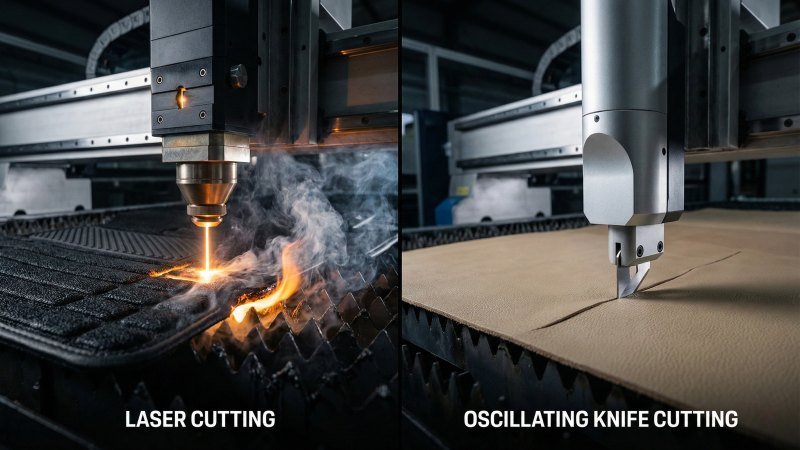
When choosing between a laser and an oscillating knife for cutting car mats, which technology delivers the best results for modern manufacturing?
The oscillating knife cutter is the superior choice for car mat manufacturing due to its ability to produce clean, smokeless edges without burning multi-layer composite materials. While lasers often cause discoloration, toxic fumes, and charred edges on PVC and XPE, oscillating knives offer faster production speeds, lower maintenance costs, and a finished product that meets strict OEM safety and aesthetic standards.
Edge Quality and Finished Appearance
Does the choice of cutting machine actually affect the visual quality and texture of the final car mat?
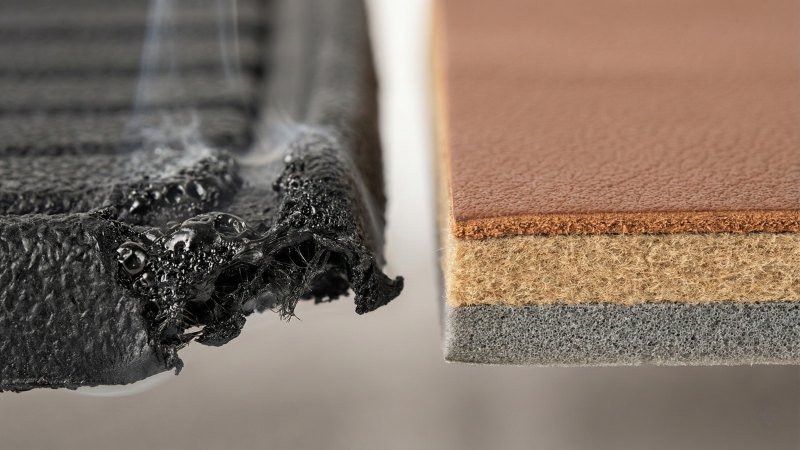
Oscillating knife cutters consistently deliver a superior edge quality for car mats by using high-frequency mechanical blades to slice through materials without generating heat. This “cold cutting” process ensures soft, clean edges, whereas laser cutters utilize thermal energy that frequently results in burnt, hardened, or discolored borders, particularly on multi-layer composites and light-colored synthetic leathers.
The Problem of Burnt and Discolored Edges with Lasers
The fundamental mechanism of a laser cutter is thermal energy. To separate the material, the machine focuses a high-power beam that essentially vaporizes the substrate. While effective for steel or acrylic, this process creates a significant issue known in the manufacturing industry as the Heat Affected Zone (HAZ).
When processing car mats, especially those made from XPE, EVA, or PVC coil, the high heat causes the material at the cutting line to melt and re-solidify. This results in a darkened, charred edge that looks significantly different from the rest of the mat. On light-colored materials, such as beige or gray automotive leather, these scorch marks are immediately visible and impossible to hide.
Hardened Edges Reduce Tactile Quality
Beyond just color changes, the physical texture of the edge changes drastically. The melted plastic or leather cools down into a hard, plasticized bead.
- Tactile Feel: Instead of the soft feel of the original leather or carpet, the customer feels a rough, scratchy ridge.
- Material Shrinkage: The heat can cause the layers of a composite mat (like 5D or 7D mats) to retract unevenly, exposing the inner foam layers.
Industry Analogy: Think of the difference between heat-sealing a nylon seatbelt and cutting it with shears. The heat seal creates a hard, melted nub intended to stop fraying, but it is rough to the touch. The shears leave a soft, flexible edge. In luxury car mats, that hard “melted nub” feel is considered a defect.
Achieving Smooth and Polished Edges with Oscillating Knives
To meet the strict quality standards of OEM (Original Equipment Manufacturer) automotive interiors, manufacturers prefer “cold cutting” technology. The oscillating knife cutter operates by physically separating the material using a sharp blade that moves up and down at high frequencies.
Because there is zero heat involved, the chemical composition of the car mat remains unchanged. The blade glides through thick XPE foam and leather layers without creating any friction burns. This results in an edge that is virtually indistinguishable from the main surface of the mat.
Visual and Physical Integrity
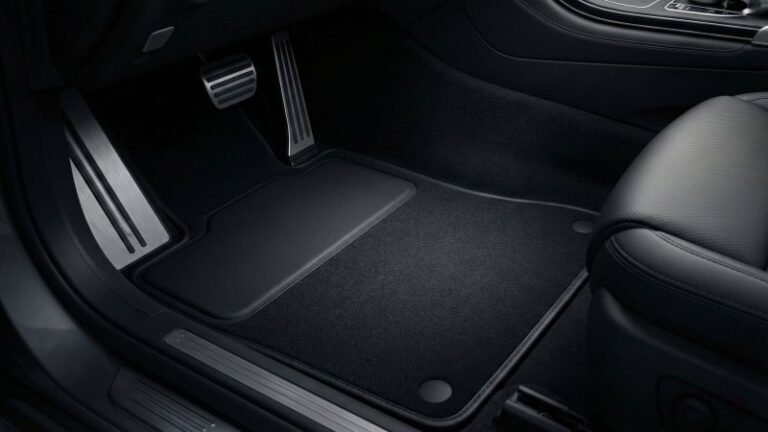
The oscillating knife preserves the original look of the material. For multi-layer mats, the cut is perfectly vertical and clean. The individual layers (leather, sponge, anti-slip backing) are flush with each other, rather than melted together. This level of precision is critical when the mats are intended for luxury vehicles where every detail counts.
| Feature | Laser Cutter Result | Oscillating Knife Result |
|---|---|---|
| Edge Color | Blackened, brown, or yellowed (Charred) | Original material color (Unchanged) |
| Edge Texture | Hard, brittle, and rough to the touch | Soft, flexible, and smooth |
| Material State | Melted and fused together | Cleanly sliced and distinct |
| Post-Processing | Often requires cleaning to remove soot | Ready for packaging immediately |
Furthermore, this method eliminates the risk of “yellowing” on white or clear PVC materials. The blade simply parts the material, leaving a finish that looks like it was stamped out by a high-precision die, but with the flexibility of digital cutting.
Dealing with Odors and Fumes
Do laser cutters create dangerous fumes or bad smells when processing car mat materials compared to oscillating knives?
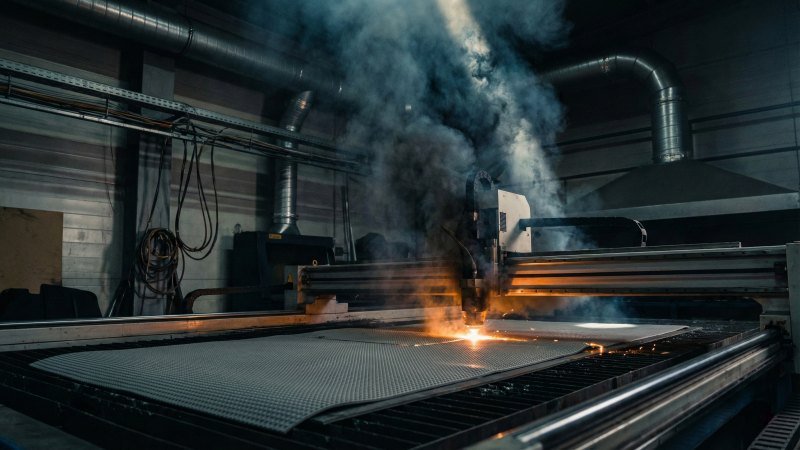
Oscillating knife cutters produce zero smoke and absolutely no odor because they utilize a cold mechanical cutting method that physically separates the material without heat. Conversely, laser cutters operate by burning through the substrate, which inevitably generates toxic fumes, hazardous gases like chlorine, and a strong, unpleasant charred smell that permeates the porous layers of automotive mats.
Unpleasant Burnt Smell Lingering on Laser-Cut Mats
The most immediate issue with laser cutting car mats is the smell. Because a laser beam uses intense heat to vaporize material, it creates smoke. Car mats are typically made of multi-layer composite materials, often containing XPE foam, sponge, or carpet fibers. These materials are porous, meaning they have tiny holes like a sponge.
When the laser burns the edge, the smoke does not just float away. Instead, the acrid smoke particles get trapped deep inside the foam layers of the mat.
Consequently, the finished product retains a strong, burnt plastic odor. In the automotive industry, the “new car smell” is a major selling point. If a customer opens a package of premium 5D floor mats and is hit with the smell of burnt rubber, they often perceive the product as low quality or defective. This lingering odor is notoriously difficult to remove, even after days of airing the mats out in a warehouse.
Industry Insight: It is similar to the difference between cutting a foam block with a hot wire cutter versus a bandsaw. The hot wire leaves a distinct chemical smell of burning plastic that lingers in the workshop and on the foam surface, whereas the bandsaw creates sawdust but no chemical odor.
Health Risks and Toxic Smoke from Cutting PVC or Leather
Beyond the bad smell, there is a serious safety concern regarding the chemical composition of the smoke. Many automotive mats, particularly “coil mats” or “wire loop mats,” are manufactured using PVC (Polyvinyl Chloride).
When a laser beam hits PVC, a chemical reaction occurs. The heat breaks down the molecular bonds, releasing hydrogen chloride gas and chlorine gas.
- Operator Health: These gases are highly toxic. Without industrial-grade filtration, operators breathing this air can suffer from respiratory issues.
- Machine Damage: Chlorine gas is corrosive. It creates an acidic environment inside the cutting machine. Over time, this acid eats away at the metal guide rails, electronics, and even the laser optics themselves, leading to premature equipment failure.
Note: Material compositions vary significantly. Manufacturers should always verify the PVC content of their raw materials with their specific supplier before attempting any thermal cutting process.
Comparison of Byproducts by Cutting Method
| Feature | Laser Cutting (Thermal) | Oscillating Knife (Mechanical) |
|---|---|---|
| Smoke Generation | High (Heavy smoke from vaporization) | None (Dust-free process) |
| Toxic Gas Release | Yes (Chlorine, Phosgene from plastics) | No (Zero chemical reaction) |
| Ventilation Needs | Heavy-duty exhaust blowers required | Standard vacuum pump only |
| Corrosion Risk | High (Acidic fumes damage machine parts) | None |
Environmentally Friendly Cutting with Knife Technology
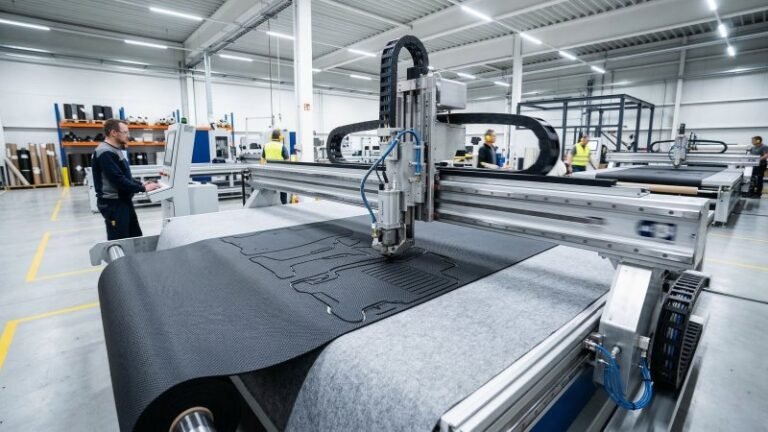
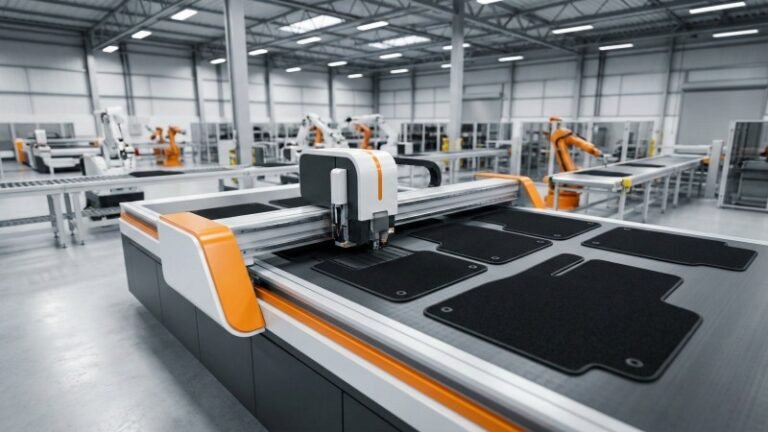
In contrast to the risks associated with lasers, oscillating knife technology is inherently clean. The process is strictly mechanical. A sharp steel blade vibrates rapidly to slice through the material.
Since there is no burning, there is no chemical change in the material. Therefore, no smoke is generated, and no toxic gases are released into the factory air.
This offers several operational advantages:
- Safety Compliance: Workshops do not need to install expensive air filtration systems to meet environmental safety regulations.
- Cleaner Workspace: There is no soot or black dust settling on the machine or the fabric.
- Operator Comfort: Employees can work near the machine without needing heavy respiratory protection gear or dealing with irritated eyes from smoke.
For factories aiming for “Green Manufacturing” standards, the oscillating knife is the only logical choice for processing synthetic automotive interiors. It transforms the cutting room from a smoky industrial zone into a clean, modern assembly area.
Production Speed and Efficiency
When it comes to daily manufacturing output, which machine allows a factory to produce more car mat sets per hour?
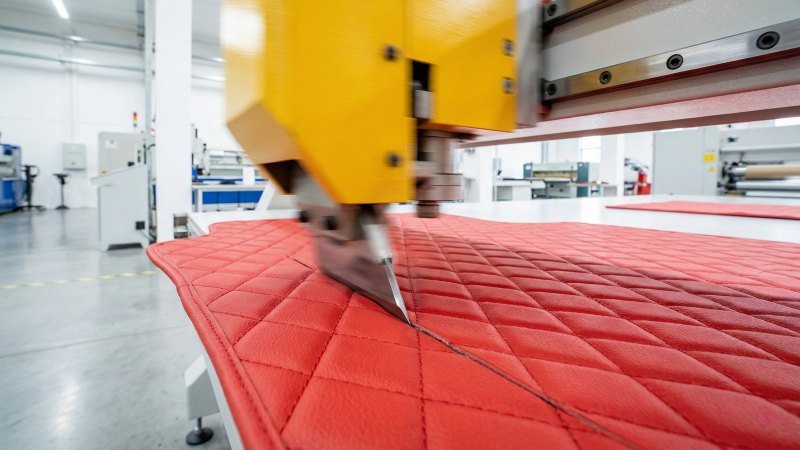
Oscillating knife cutters provide significantly higher production speeds for automotive mats, typically maintaining cutting velocities between 800 mm/s and 1200 mm/s even on complex patterns. In contrast, laser cutters must drastically reduce their speed to approximately 200 mm/s to 400 mm/s to penetrate thick automotive materials effectively, making the oscillating knife roughly 3 to 4 times faster for this specific application.
Throughput Comparison for Multi-Layer Car Mats
Time is money in a production environment. The fundamental difference in speed lies in how the machines tackle the material. A laser cutter relies on thermal energy. To cut through the dense layers of a standard “5D” or “7D” car mat—which usually consists of PU leather, sponge, XPE foam, and an anti-slip backing—the laser must move slowly. If it moves too fast, it will not cut all the way through.
On the other hand, an oscillating knife uses a high-frequency mechanical motion. The blade vibrates thousands of times per minute. This allows the head to glide through the material with minimal resistance.
Industry Analogy: Consider the mechanics of penetration. A laser works like melting a hole through a plastic sheet with a soldering iron—it takes time for the heat to transfer and vaporize the material depth-wise. The oscillating knife works like a jigsaw—it mechanically clears the path instantly. The mechanical action is inherently faster on thick, insulating materials like foam.
Acceleration and Cornering
Car mats have many curves to fit the vehicle chassis. Oscillating knife systems typically feature high-torque servo motors. These allow for rapid acceleration and deceleration around these tight corners. Lasers often struggle here. They must manage power modulation in corners to avoid burning a hole, which further slows down the cycle time.
Estimated Daily Production Output (8-Hour Shift)
| Metric | Laser Cutting Machine | Oscillating Knife Cutter |
|---|---|---|
| Average Speed | 300 mm/s | 1000 mm/s |
| Cut Time Per Mat | 3 – 5 minutes | 1 – 1.5 minutes |
| Daily Output (Sets) | 40 – 60 sets | 150 – 200 sets |
| Bottleneck | Thermal penetration rate | Operator loading speed |
Performance on Thick Composite Materials like XPE and EVA
Thickness is the enemy of laser cutting speed. This is particularly relevant for heavy-duty XPE (Cross-linked Polyethylene) and EVA materials used in trunk liners and high-end floor mats.
The Focal Point Limitation
A laser beam is not perfectly straight like a knife blade. It is shaped like an hourglass. It focuses to a tiny point and then expands again.
- The Issue: When cutting material thicker than 10mm, the laser beam loses focus at the bottom of the material.
- The Result: To compensate for this loss of energy, the operator must slow the machine down drastically to ensure the beam burns through the bottom layer.
The Mechanical Advantage
The oscillating knife uses a straight, rigid blade. Whether the material is 5mm thick or 20mm thick, the blade remains vertical and sharp throughout the entire depth.
Consequently, the cutting speed for an oscillating knife remains relatively consistent regardless of thickness. It does not need to slow down to “melt” the bottom layer. For manufacturers processing thick car mats, this difference is critical. A laser might take several passes or move at a crawl to cut a thick trunk liner, while an oscillating knife processes it in a single, rapid pass.
Moreover, lasers often struggle with the “sandwich” structure of car mats. The top layer might burn quickly, but the dense foam in the middle absorbs energy. This inconsistency forces the operator to run the machine at the speed required for the toughest layer, penalizing the entire production run. The oscillating knife faces no such penalty; it simply slices through all densities equally.
Long-Term Maintenance and Operating Costs
Which cutting technology offers better long-term value and lower maintenance costs for a car mat factory?
Oscillating knife cutters demonstrate superior cost-efficiency over time due to low-cost consumables and simple mechanical upkeep. Conversely, laser cutters incur substantial expenses through the regular replacement of high-voltage CO2 laser tubes and require specialized labor for delicate optical alignments, driving up total ownership costs.
Laser Tube Lifespan and High Replacement Expenses
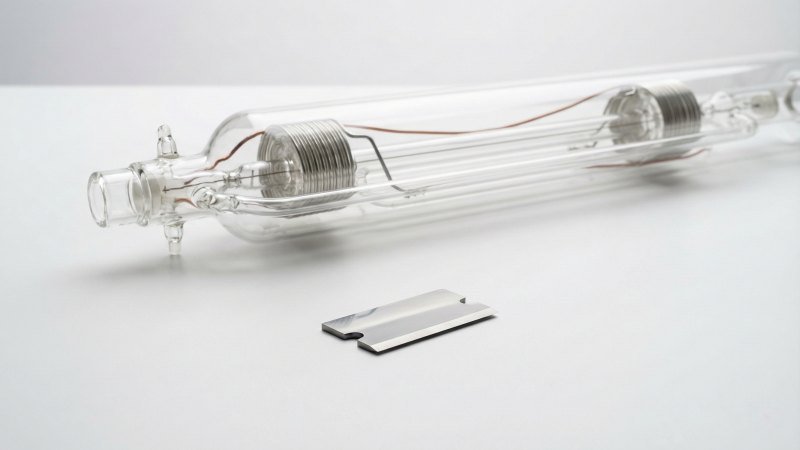
The most significant recurring cost for a laser cutting machine is the CO2 laser tube itself. Unlike a metal cutting tool that can be sharpened, a laser tube is a consumable component with a finite lifespan. Most laser machines used for cutting automotive mats utilize glass CO2 tubes.
Over time, the gas mixture inside the sealed glass tube degrades. This leads to a gradual loss of cutting power. To maintain the same cutting depth on thick XPE or PVC materials, the operator must slow the machine down or increase the power percentage. Eventually, the tube fails completely and must be replaced.
- Finite Hours: A standard glass laser tube typically lasts between 8,000 to 10,000 working hours. However, running the machine at high power (often necessary for thick car mats) can reduce this lifespan significantly.
- High Replacement Cost: Replacing a high-wattage tube (e.g., 150W or 180W) is expensive. It is a fragile, high-voltage component that requires careful shipping and installation.
- Production Downtime: When a tube fails, production stops until a replacement arrives and is installed.
Industry Analogy: A laser tube behaves like a tire on a high-mileage delivery truck. It doesn’t last forever. As the tread (gas) wears down, performance slips (power drops), and eventually, you must pay a significant amount to replace it to keep the vehicle on the road. A blade, by comparison, is like replacing a windshield wiper—cheap, instant, and easy to do yourself.
Cost Effectiveness of Blade Replacements
In comparison, the oscillating knife cutter relies on physical blades. These blades are typically made from Tungsten Carbide, a hard and durable metal. While blades are also consumables, the economic model is entirely different.
The cost of a single oscillating blade is a fraction of the cost of a laser tube. A factory can purchase a box of blades for the price of a minor laser repair. This allows for predictable, low-cost budgeting. Furthermore, changing a blade takes only seconds and requires no special tools.
Consumable Cost Comparison
| Cost Factor | CO2 Laser Cutter | Oscillating Knife Cutter |
|---|---|---|
| Primary Consumable | CO2 Glass Laser Tube | Tungsten Carbide Blade |
| Approximate Unit Cost | High ($500 – $2,000+) | Low ($5 – $20) |
| Replacement Frequency | Every 1-2 years (depending on shift) | Weekly or Daily (depending on volume) |
| Failure Impact | Major production halt | 1-minute pause to swap blade |
| Performance Drop-off | Gradual power loss over months | Sudden dullness (fixable instantly) |
Even though blades must be changed more frequently than tubes, the total annual cost remains significantly lower. Additionally, using a dull blade only affects cut quality slightly before it is swapped, whereas a degrading laser tube slows down the entire production line for weeks before it is finally replaced.
Complexity of Optical Alignment vs Mechanical Maintenance
Maintenance complexity is another critical factor for factory owners. A laser cutter relies on a complex optical path. The beam bounces off a series of mirrors before going through a focal lens.
- Optical Alignment: If the machine vibrates or bumps, the mirrors can become misaligned. The operator must then perform a tedious “beam alignment” process. This involves firing test shots and adjusting screws on mirror mounts to ensure the beam hits the center of the lens. If this is off by even a millimeter, the machine will not cut through the car mat.
- Lens Cleaning: The smoke generated by burning car mats (as discussed in previous sections) creates soot. This soot settles on the mirrors and lenses. If not cleaned daily with specialized optical wipes and solution, the heat will crack the expensive lens.
Mechanical Simplicity of the Knife
The oscillating knife machine is mechanically simpler regarding the cutting tool. It does not use mirrors or fragile glass.
- Robust Mechanics: The maintenance primarily involves lubricating the guide rails and keeping the felt conveyor belt clean.
- No “Drift”: The knife does not lose its “alignment” in the same way a laser beam does. The blade is physically clamped into a holder. As long as the motor turns, the knife cuts.
For a busy workshop floor, the rugged nature of the oscillating knife reduces the need for hiring highly skilled technicians to manage sensitive optics. It functions more like a standard CNC router or milling machine—robust, reliable, and easy to service.
Final Verdict: Why Oscillating Knife is the Industry Standard
Why have top automotive interior manufacturers universally shifted away from lasers to oscillating knife systems for cutting car mats?
Oscillating knife cutters have established themselves as the industry standard because they deliver the clean, odorless, and precision-cut finish required by OEM automotive brands. While lasers struggle with burnt edges and toxic fumes on composite materials, oscillating knives offer a safe, high-speed, and eco-friendly solution that meets strict quality control regulations.
Meeting High Standards for OEM and Aftermarket Interiors
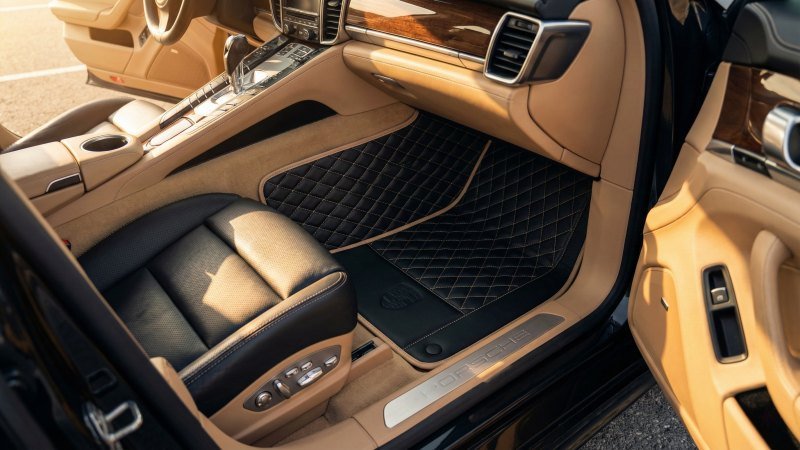
In the automotive supply chain, quality requirements are non-negotiable. Tier 1 suppliers (companies that make parts directly for car brands like Toyota, Ford, or BMW) face strict audits regarding VOCs (Volatile Organic Compounds). These are the chemicals that cause smells and potential health issues inside a car.
Because laser cutting burns material, it alters the chemical structure of the plastic or rubber. This often causes the finished mat to fail VOC testing due to residual odors. Consequently, OEM manufacturers have largely banned thermal cutting for interior soft trim. They demand a “cold cut” finish that creates no chemical byproducts.
The “Unboxing” Experience
For aftermarket manufacturers selling directly to consumers online, the first impression is critical.
- The Risk: If a customer opens a box of expensive custom floor liners and smells burnt plastic, the return rate increases significantly.
- The Solution: Oscillating knife technology ensures that the product looks and smells like a factory-original part.
Industry Analogy: The transition from laser to oscillating knife in car mat production is similar to the industry shift from manual pattern making to CAD digitization. Just as manual patterns became too slow and inaccurate for modern demands, laser cutting has become too dirty and hazardous for today’s high-quality interior standards. The oscillating knife is the natural evolution of the hydraulic die press—offering the same “stamped” quality without the high tooling costs.
By adopting oscillating knife technology, business owners future-proof their production. They can bid on contracts that strictly prohibit burnt edges, opening up more lucrative markets that are closed to laser-equipped shops.
Summary Comparison of Key Features
To help you make the final decision for your production line, here is a direct comparison of how these two technologies perform specifically on automotive floor mats.
| Feature | Laser Cutter | Oscillating Knife Cutter |
|---|---|---|
| Edge Finish | Burnt, hard, and discolored | Clean, soft, and smooth |
| Smell & Odor | Strong burnt smell (difficult to remove) | Odorless |
| Material Versatility | Limited (cannot cut PVC safely) | Universal (Cuts PVC, Leather, Foam) |
| Cutting Speed | Slow on thick composites (Thermal lag) | Fast (3-4x faster on average) |
| Maintenance Cost | High (Tube replacements & optics) | Low (Blade replacements only) |
| Safety | High risk (Toxic fumes, fire hazard) | Safe (Zero emissions) |
| Best Application | Engraving logos or thin fabrics | Mass production of car mats |
Conclusion
In the competitive automotive interior market, the quality of the final product dictates success. While laser cutters have their place in other industries, the evidence clearly favors oscillating knife technology for car mat production. By eliminating burnt edges, toxic fumes, and high consumable costs, manufacturers can produce a premium product faster and more safely. For businesses looking to scale production and meet high consumer expectations, investing in an oscillating knife cutter is not just an upgrade—it is a necessary evolution.